




What's Happening?
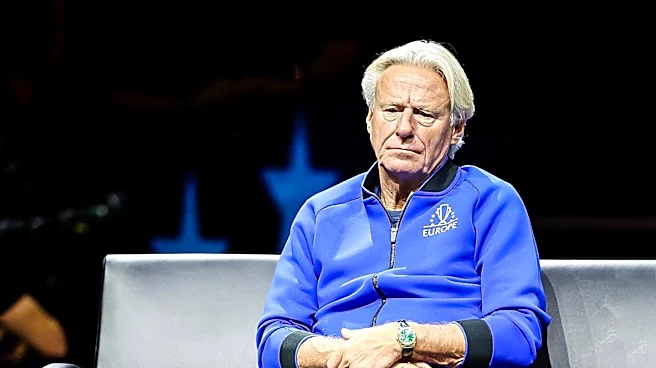
Tennis legend Bjorn Borg, now 70, has expressed his primary regret is not remaining involved in the sport after his initial retirement at age 25. Borg, who won 11 Grand Slam titles, including four consecutive French Opens and three 'Channel Slams,' retired
in 1982 due to a loss of motivation. He attempted a brief comeback from 1991 to 1993, during which he failed to win a single match, going 0-12. Borg clarified that his 1991 comeback was not an attempt to relaunch his career but a personal effort to 'survive' and 'get his life back on track' during a difficult period. He turned down numerous lucrative offers from sponsors at the time, a decision he now views as a mistake, wishing he had accepted roles that would have kept him connected to the tennis world and his contacts.
Why It's Important?
Borg's reflection highlights the significant personal and professional challenges athletes can face after retiring from elite competition, particularly when stepping away entirely from their established professional identity. His experience underscores the importance of post-career planning and maintaining connections within one's field, even in a different capacity. For the tennis world, Borg's absence during a crucial period meant a loss of a prominent figure who could have contributed as a personality or mentor. His later involvement as Team Europe captain at the Laver Cup from 2017 to 2023, coaching players like Roger Federer, Rafael Nadal, and Novak Djokovic, demonstrates the value he eventually brought back to the sport, albeit years later than he now wishes. This narrative offers a cautionary tale for athletes about the potential long-term impact of completely disengaging from their professional communities.
What's Next?
While Borg's active playing career is long over, his current involvement in tennis, such as his past role as Team Europe captain at the Laver Cup, indicates a continued connection to the sport. His successful apparel company also keeps his name relevant, though he notes younger generations often associate him more with his brand than his tennis achievements. His reflections may encourage current and future athletes to consider more carefully how they transition out of their competitive careers, potentially leading to more structured support systems for post-retirement engagement within sports organizations. For Borg himself, his current activities suggest a comfortable and engaged post-playing life, albeit with a lingering regret about past decisions.
Beyond the Headlines
Borg's story delves into the psychological and identity challenges faced by athletes whose lives are intensely defined by their sport from a young age. His candid admission that his 1991 comeback was driven by a need to 'save his life' rather than a desire to compete reveals the profound personal struggles that can accompany the end of a high-profile career. This goes beyond mere financial considerations, touching on mental well-being and the search for purpose. The regret of not staying involved suggests a deeper understanding of the value of community and belonging, which he initially abandoned. His experience offers a powerful insight into the human element behind athletic stardom, emphasizing that even legendary figures grapple with identity and purpose once the spotlight of competition fades.