





What's Happening?
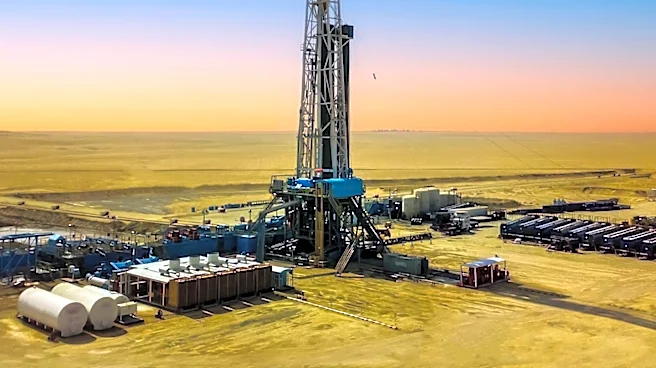
Research from Australian academics, published in the journal Sustainable Futures, indicates that major U.S.-listed fossil fuel companies are exposed to a 'carbon bubble' estimated at approximately $99.3 billion. This figure represents about 5.5% of their
current market value. The study, conducted by researchers at the University of Technology Sydney Business School and Macquarie University, analyzed 31 significant climate policy signals between 1996 and 2023, including 27 United Nations climate conferences and four key policy announcements in the U.S. and EU. By comparing company valuations under business-as-usual and climate-policy-constrained scenarios, the researchers found that financial markets have already begun to incorporate some climate policy risks into company valuations. While the estimated overvaluation is smaller than some previous projections, it underscores the ongoing financial risks associated with the global shift towards cleaner energy and stronger climate policies.
Why It's Important?
This research is important for U.S. investors, financial institutions, and policymakers as it provides a more nuanced understanding of the financial risks facing the fossil fuel sector. The existence of a 'carbon bubble,' even if smaller than previously estimated, signifies that a portion of these companies' market value is predicated on an outdated economic outlook that doesn't fully account for climate policy changes and the increasing competitiveness of cleaner energy. For investors, this highlights the need for careful assessment of transition risks and climate-related financial disclosures to differentiate between companies adapting to the energy transition and those heavily exposed to changing market conditions. Policymakers are urged to implement clear and predictable climate policies to help guide market adjustments and reduce uncertainty, ultimately influencing investment decisions and the stability of financial markets.
What's Next?
The findings suggest that the energy transition will continue to reshape the economic landscape for fossil fuel companies. Companies that proactively adjust their investment strategies and prepare for changes in energy demand are likely to be better positioned. Conversely, those that continue to rely on past business conditions may face increasing financial vulnerability. The research emphasizes that significant transition risks persist, and their impact will evolve with the stringency of carbon policies. Investors and financial institutions will likely increase their scrutiny of climate-related financial disclosures to assess companies' preparedness. Policymakers are expected to continue developing and refining climate policies, which will further influence market valuations and investment flows within the energy sector.
Beyond the Headlines
The concept of a 'carbon bubble' extends beyond immediate financial implications, touching upon broader ethical and systemic considerations. It raises questions about the long-term sustainability of investments in industries heavily reliant on fossil fuels and the potential for systemic financial instability if these risks are not adequately managed. The research implicitly highlights the tension between short-term economic gains from fossil fuel extraction and the long-term imperative of climate action. It also underscores the evolving role of financial markets in driving or hindering the energy transition, as market signals and investor behavior can either accelerate or decelerate the shift towards a low-carbon economy. The study's focus on U.S.-listed companies indicates that even in a major economy, the financial system is grappling with the profound implications of climate change.