
What's Happening?
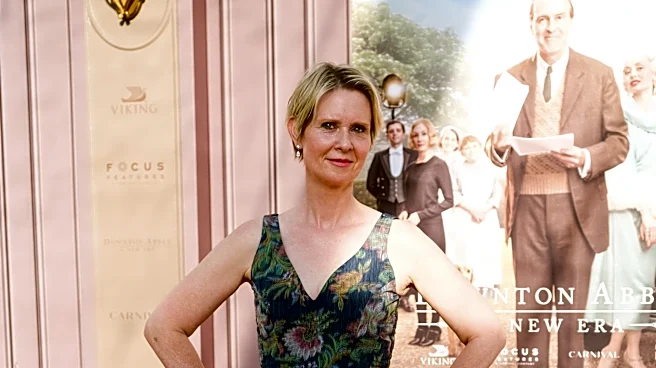
Cynthia Nixon was recently seen in New York City wearing a pair of pink heels that have drawn comparisons to the fashion choices of Carrie Bradshaw, a character from 'Sex and the City.' The actress, who
played Miranda Hobbes in the series, stepped out in the eye-catching footwear, which was described as having a feminine color and sophisticated silhouette. This fashion moment highlights Nixon's personal style and its resonance with the iconic fashion legacy of 'Sex and the City,' particularly the character known for her distinctive shoe collection. The observation was made in the context of a broader fashion article discussing Naomi Watts' pinstripe blazer.
Why It's Important?
This observation is important as it underscores the lasting cultural impact of 'Sex and the City' and its influence on fashion. The comparison of Cynthia Nixon's personal style to Carrie Bradshaw's iconic shoe choices demonstrates how deeply embedded the show's fashion narratives are in public consciousness. For Nixon, it highlights her continued relevance in popular culture and her ability to generate fashion interest, even years after her most famous role. This also reflects how celebrity fashion can drive trends and discussions, influencing consumer interest in specific styles and brands, even if indirectly through character association.
What's Next?
While this specific fashion moment is a snapshot, it contributes to the ongoing public interest in celebrity style and the enduring legacy of 'Sex and the City.' It may lead to increased media attention on Nixon's future public appearances and fashion choices. For fashion enthusiasts, it could inspire searches for similar pink heels or a renewed appreciation for bold footwear. The continued association of the 'Sex and the City' cast with fashion trends ensures that their personal styles remain a topic of discussion and influence.
Beyond the Headlines
The enduring comparison of Cynthia Nixon's fashion to Carrie Bradshaw's style speaks to the powerful role of television in shaping cultural aesthetics and individual perceptions of celebrity. It illustrates how fictional characters can become fashion icons, influencing real-world trends and consumer behavior long after their initial broadcast. This phenomenon also touches on the concept of 'typecasting' in fashion, where actors are often associated with the sartorial choices of their most famous roles. It highlights the blurred lines between an actor's personal identity and their on-screen persona, especially when a role has had such a significant cultural impact.