



What's Happening?
Swedish interior designer Beata Heuman is gaining recognition for her distinctive style that deviates from the conventional minimalist aesthetic often associated with Scandinavian design. Featured as the cover star for Vogue Scandinavia Living's third
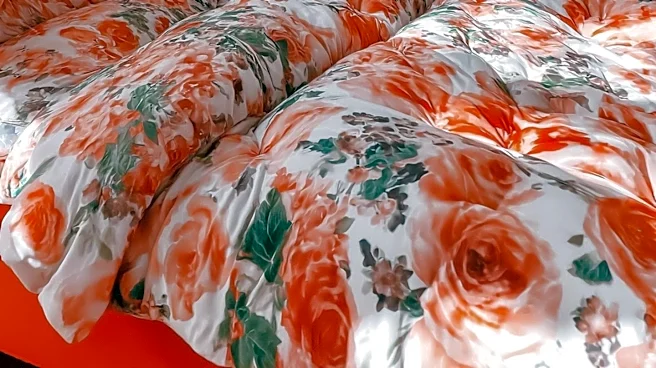
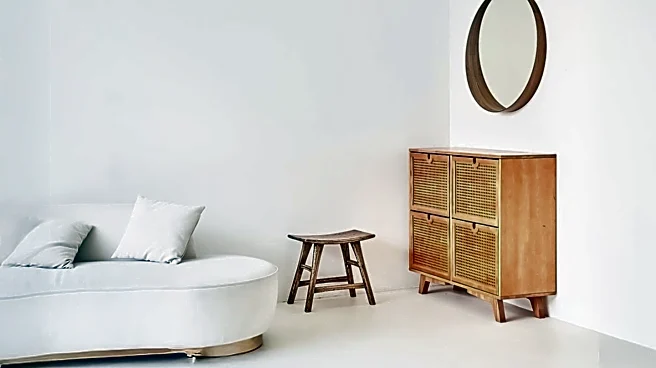
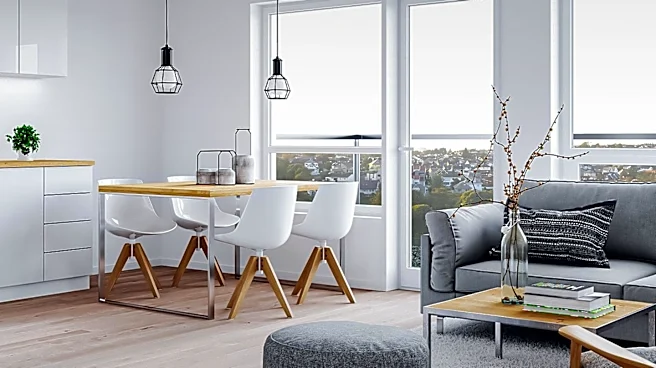
iteration, Heuman blends her Swedish folkloric heritage with a British countryside sensibility. Her approach demonstrates that Scandinavian design does not exclusively mean minimalism, incorporating elements like romantic floral fabrics alongside neon signs, and playful soaps in bathrooms. This unique style is showcased in her family farmhouse in Sireköpinge, Skåne, where she grew up and spends her vacations. Heuman's work is in high demand, suggesting a shift in aesthetic direction within the region's home interiors. Her design philosophy emphasizes a more personal and layered approach, moving away from the stark simplicity often expected from Nordic interiors.
Why It's Important?
Heuman's work is important because it broadens the understanding and application of Scandinavian design, challenging a long-held perception of its inherent minimalism. This reinterpretation could influence interior design trends globally, including in the U.S., by encouraging a more eclectic and personalized approach to Nordic-inspired aesthetics. For consumers and designers, it offers a fresh perspective, demonstrating that comfort and individual expression do not need to be sacrificed for the sake of minimalism. This shift could lead to a greater diversity in product offerings in the home furnishings market, moving beyond muted tones and simple lines to incorporate more vibrant patterns, textures, and unique decorative elements. It also highlights the potential for cultural blending in design, showing how traditional roots can be combined with international influences to create innovative and appealing spaces.
What's Next?
The increased visibility of designers like Beata Heuman could lead to a broader acceptance and adoption of more diverse Scandinavian design interpretations. We may see more interior design firms and furniture retailers in the U.S. incorporating elements of Heuman's style, such as the fusion of folkloric patterns with modern accents, or a greater emphasis on comfort and personality over strict minimalism. This could manifest in new product lines, design collaborations, and a general evolution of what is considered 'Scandinavian' in the design world. Educational institutions and design publications might also begin to explore and promote these evolving definitions, further influencing future generations of designers and consumers. The trend could also encourage individuals to explore their own cultural heritage in their interior design choices, moving towards more personalized and less prescriptive aesthetics.
Beyond the Headlines
Heuman's success in redefining Scandinavian design touches upon deeper cultural and commercial implications. Ethically, it promotes authenticity and individuality in design, moving away from a potentially restrictive and homogenous aesthetic. Commercially, it opens up new market segments for designers and manufacturers who can cater to a demand for more characterful and less austere interiors. This evolution could also spark discussions about cultural appropriation versus appreciation in design, as designers draw inspiration from various traditions. Long-term, this movement could contribute to a more dynamic and inclusive global design landscape, where regional styles are celebrated for their diversity rather than being confined to narrow definitions. It underscores the idea that design is a living, evolving entity, constantly shaped by individual creativity and cultural exchange.