






What's Happening?
German transmission system operator 50Hertz has selected ABL to provide marine warranty survey services for the 2 GW Ostwind 4 offshore grid connection project in the German Baltic Sea. ABL's responsibilities will encompass marine assurance for all transportation
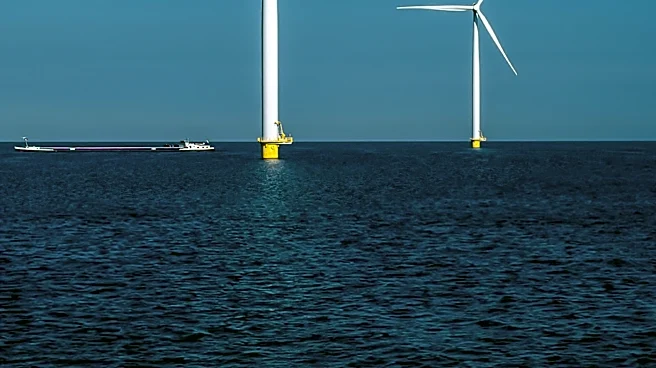
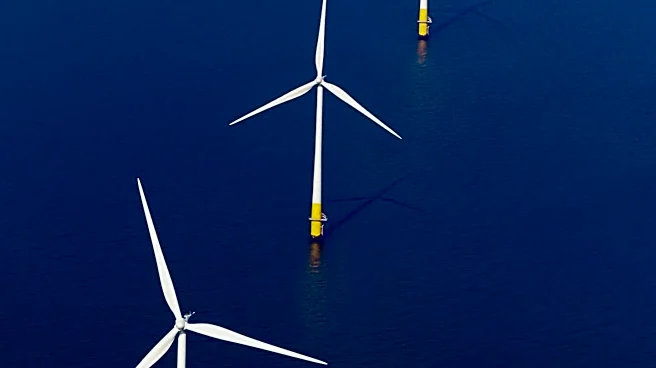
and installation operations, including subsea cables and offshore infrastructure. This includes the installation of the project's converter platform and associated assets. The Ostwind 4 project is notable as it will be the first to utilize a high-voltage direct current (HVDC) transmission system in the German Baltic Sea, designed to deliver up to 2 GW of transmission capacity. The project involves an offshore converter platform, an onshore converter station, and a 110-km subsea and onshore cable route, connecting offshore wind generation to Germany's electricity network. ABL's scope of work includes reviewing technical documentation, assessing marine spread suitability, and providing on-site personnel for warranted operations.
Why It's Important?
This appointment is crucial for the successful and safe execution of the Ostwind 4 project, a significant undertaking in Germany's renewable energy transition. The use of HVDC transmission in the German Baltic Sea for the first time marks a technological milestone, requiring specialized expertise in marine assurance to mitigate risks associated with complex offshore installations. ABL's role ensures independent oversight and risk management, which is vital for projects of this scale and complexity, especially given the challenging marine environment. The project's 2 GW capacity will substantially contribute to Germany's renewable energy targets, reducing reliance on fossil fuels and enhancing energy security. The successful implementation of such projects is critical for the broader European energy grid, demonstrating the feasibility and scalability of offshore wind power and its integration into national electricity networks.
What's Next?
ABL's German team, based in Hamburg, will commence its work by reviewing and approving technical documentation and procedures for the Ostwind 4 project. This will be followed by assessing the suitability of the proposed marine spread, which includes vessels and equipment used for transportation and installation. Subsequently, ABL will deploy on-site personnel to witness and approve warranted operations, ensuring adherence to safety and quality standards throughout the project's execution. The project will then proceed with the installation of subsea cables, the offshore converter platform, and other associated infrastructure. The successful completion of these phases will lead to the commissioning of the 110-km subsea and onshore cable route, ultimately connecting the offshore wind generation to Germany's electricity network. The project's progress will be closely monitored as it represents a key component of Germany's energy transition strategy.
Beyond the Headlines
The Ostwind 4 project, with ABL's involvement, highlights the increasing complexity and specialized requirements of offshore renewable energy infrastructure. The deployment of HVDC technology in the German Baltic Sea signifies a broader trend towards more efficient and higher-capacity transmission systems for integrating large-scale offshore wind farms into national grids. This project could serve as a blueprint for future offshore wind developments globally, particularly in regions with similar marine conditions and energy demands. The emphasis on independent marine assurance also reflects a growing industry standard for ensuring safety, environmental protection, and project integrity in high-risk offshore operations. The successful completion of Ostwind 4 will not only bolster Germany's renewable energy portfolio but also contribute valuable insights and best practices for the global offshore wind industry, influencing technological advancements and regulatory frameworks for future projects.