





What's Happening?
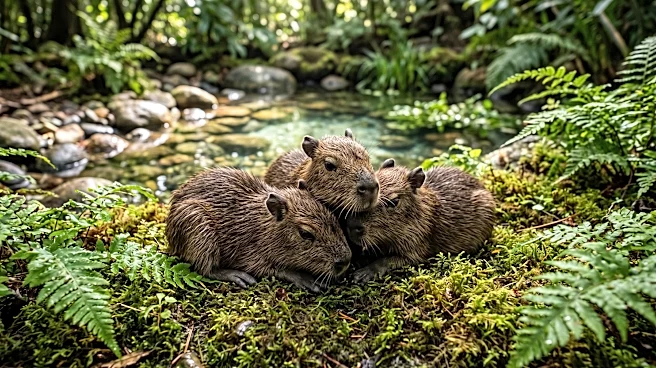
The Royal Zoological Society of Scotland (RZSS) announced that three newborn capybara pups at Edinburgh Zoo have been named Tattie, Tunnock, and Toddy. These names, chosen by public vote on social media, are inspired by Scottish delicacies. The two male
pups are named Tunnock and Toddy, while the female pup is named Tattie. The 'babybaras' were born on October 28 to parents Luna and Rodney. Last week, the zoo's veterinary team confirmed the pups' sexes as two boys and one girl after weighing and microchipping them. This event follows the viral fame of another capybara pup, Bru, born in May, who was the first capybara born in Scotland in 18 years. Keepers noted Bru is adjusting to no longer being the center of attention but is expected to bond with his new siblings.
Why It's Important?
This event highlights the public engagement strategies employed by zoological institutions to foster interest in wildlife conservation. By involving the public in naming the capybara pups, Edinburgh Zoo generates significant social media buzz and public awareness, which can translate into increased visitation and support for their conservation efforts. The popularity of these animals, particularly following Bru's viral fame, underscores the role of charismatic megafauna in drawing attention to broader conservation messages. For the zoo, this public interaction helps maintain relevance and funding, crucial for animal care and breeding programs. The focus on Scottish delicacies for names also subtly promotes local culture and identity, creating a unique connection between the animals and the region.
What's Next?
The capybara pups, now named, will continue to be a focal point for Edinburgh Zoo's public outreach. The zoo will likely provide updates on their growth and development, further engaging the public through social media and educational programs. The integration of the new pups with their older sibling, Bru, will be monitored, with keepers anticipating a eventual bond between them. The RZSS will continue its wildlife conservation efforts, with the capybara breeding program contributing to the understanding and preservation of the world's largest rodents. Future public engagement initiatives, potentially similar naming competitions, may be launched for other new arrivals at the zoo, leveraging the success of this campaign.
Beyond the Headlines
The naming of the capybara triplets after Scottish delicacies reflects a broader trend in cultural branding and local identity promotion within public institutions. This approach not only endears the animals to the local population but also subtly reinforces regional pride and culinary heritage. The viral success of animals like Bru and the subsequent public interest in the new pups demonstrate the power of social media in shaping public perception and engagement with conservation. This digital interaction can transform passive observation into active participation, potentially influencing public support for environmental causes and responsible tourism. The 'soap opera' description of the capybaras' lives by Mr. McGarry also points to the anthropomorphization of animals, which, while engaging, can sometimes overshadow the scientific and ecological aspects of conservation.