





What's Happening?
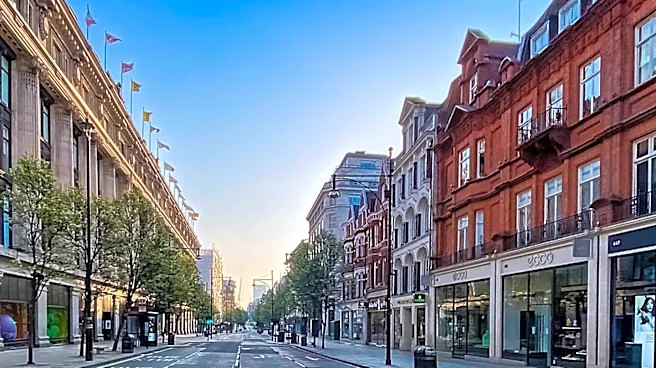
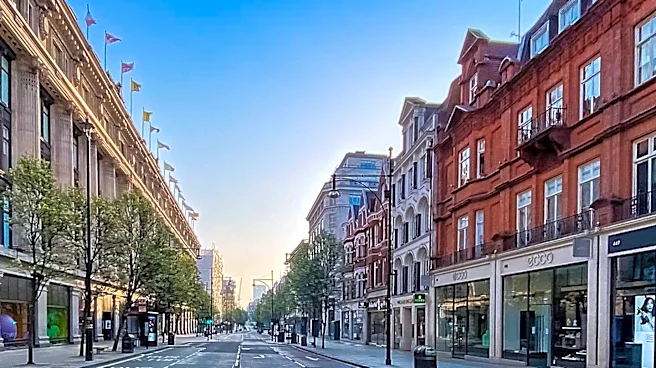
A significant stretch of London's iconic Oxford Street has been permanently made traffic-free, transforming it into a pedestrian-only zone between Orchard Street and Great Portland Street. This initiative, championed by Mayor Sadiq Khan, aims to revitalize
the famous shopping district, which has faced challenges including shop closures during the COVID-19 pandemic and a shift to online shopping. Khan stated that the pedestrianization would increase shopper numbers and make the capital 'greener.' While many shoppers have welcomed the move, praising the more comfortable walking experience, the scheme has drawn criticism from black cab drivers and disability rights activists. Concerns include potential traffic jams in neighboring areas and increased difficulty for people with disabilities and young children to access stores, as they may have to walk further to find taxis.
Why It's Important?
The pedestrianization of Oxford Street represents a significant urban planning decision with broad implications for London's economy, environment, and social equity. For businesses on Oxford Street, the move is intended to boost footfall and spending, potentially revitalizing a key retail hub that generates £3.1 billion annually. Environmentally, reducing vehicle traffic aligns with broader goals of creating greener, more sustainable cities by lowering emissions and noise pollution. However, the controversy highlights the complex trade-offs in urban development. The concerns raised by taxi drivers and disability advocates underscore potential negative impacts on accessibility and local traffic flow, which could disproportionately affect certain groups. This initiative serves as a case study for other major cities considering similar pedestrianization projects, illustrating the need to balance economic benefits and environmental goals with accessibility and community impact.
What's Next?
The initial phase of Oxford Street's pedestrianization will be closely monitored to assess its impact on shopper numbers, local businesses, traffic patterns in surrounding areas, and accessibility for all residents. Mayor Sadiq Khan has indicated that plans to close off the rest of the street to vehicles will depend on the success of this first phase. Stakeholders, including local residents, business owners, taxi associations, and disability advocacy groups, will likely continue to voice their feedback, influencing future decisions. The city may need to implement adjustments, such as optimizing public transport links or creating more accessible drop-off points, to address the concerns raised. The long-term success of the project will hinge on its ability to attract more visitors while mitigating negative consequences for those who rely on vehicular access.
Beyond the Headlines
This development reflects a global trend in urban planning towards creating more pedestrian-friendly city centers, often driven by environmental concerns, public health initiatives, and a desire to enhance urban living quality. However, it also exposes underlying tensions between different urban user groups. The debate over Oxford Street's pedestrianization highlights the challenge of designing inclusive urban spaces that cater to diverse needs, from shoppers seeking a leisurely experience to individuals with mobility challenges requiring convenient access. It also touches upon the evolving role of traditional retail streets in the age of e-commerce, as cities seek innovative ways to keep these areas vibrant and relevant. The project could serve as a model, or a cautionary tale, for how cities balance modernization with the preservation of accessibility and local character.