





What's Happening?
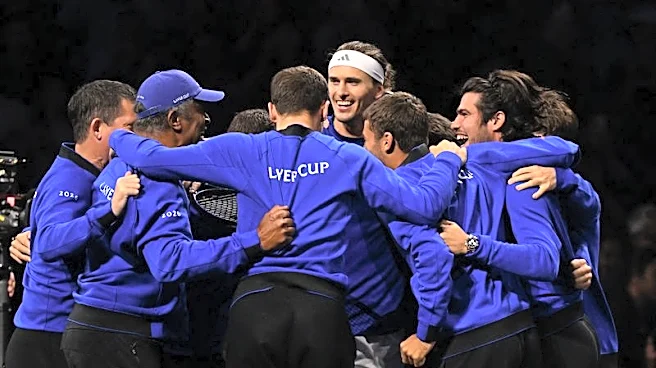
Tennis legend John McEnroe has called for professional tennis players to boycott Grand Slam tournaments to secure a larger share of the sport's revenue. Speaking at the Laver Cup, McEnroe argued that players should be considered partners in the major
tournaments and are currently receiving too small a percentage of the earnings. This comes as players like Jannik Sinner and Aryna Sabalenka have already engaged in subtle protests, limiting media appearances at events like the French Open and Wimbledon. The players' goal is to achieve a 22% share of Grand Slam tournament revenue by 2030. McEnroe believes that drastic action, such as boycotting one or two Grand Slams, is the only way to compel organizers to address these financial disparities. He emphasized that while Grand Slams are incredible events, the players' contributions to their success warrant a more equitable distribution of profits.
Why It's Important?
McEnroe's call for a boycott highlights a significant and long-standing tension between professional tennis players and Grand Slam organizers regarding revenue sharing. If players were to follow through with a boycott, it could have profound financial and reputational consequences for the sport's most prestigious events, potentially leading to substantial losses in broadcast rights, sponsorship deals, and ticket sales. This move could force a renegotiation of revenue distribution models, potentially shifting more power and wealth towards the athletes. For U.S. tennis, this could mean a re-evaluation of how prize money and earnings are structured at events like the U.S. Open, impacting American players' incomes and the overall financial landscape of professional tennis in the country. The outcome could set a precedent for other professional sports where athletes seek a greater share of the profits generated by their performances.
What's Next?
The immediate next steps will likely involve discussions among player associations, individual athletes, and Grand Slam organizers. While a full-scale boycott is a significant and potentially disruptive action, McEnroe's public endorsement could galvanize player support and increase pressure on tournament bodies. Players may continue to explore less drastic forms of protest, such as further limitations on media engagement or collective statements, to push for their demands. The tennis world will be watching to see if any prominent players or groups publicly support McEnroe's call for a boycott, which could escalate the situation. Additionally, there may be renewed calls for changes to match formats, such as replacing the fifth set with a match tie-break, to address concerns about player welfare and fan engagement, particularly after late-night finishes at tournaments like the U.S. Open.
Beyond the Headlines
Beyond the immediate financial implications, this debate touches upon broader issues of athlete empowerment and the commercialization of professional sports. McEnroe's argument that players should be 'partners' in the success of Grand Slams challenges the traditional power dynamic where tournament organizers hold significant control over revenue and decision-making. This situation could spark a wider conversation about labor rights for athletes in individual sports, potentially influencing how other sports leagues and organizations structure their relationships with their stars. The focus on player well-being, particularly concerning match length and scheduling, also highlights the increasing demands placed on athletes and the need for sustainable practices within professional sports. The outcome of this dispute could redefine the economic model of professional tennis and potentially inspire similar movements in other athletic arenas.