







What's Happening?
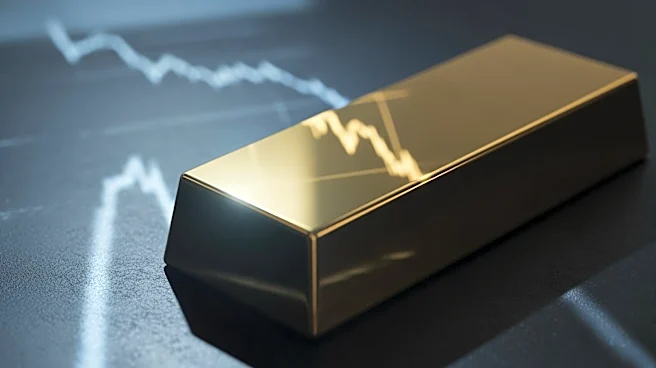
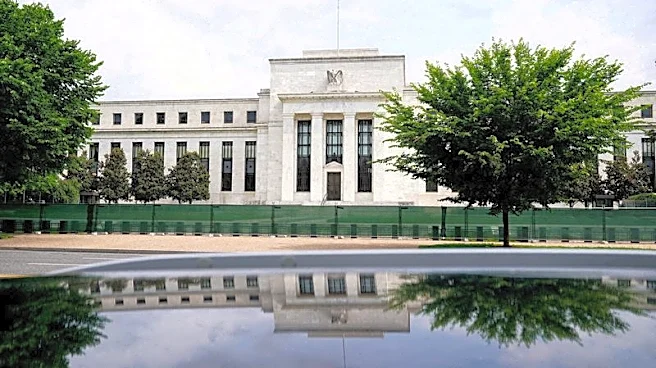
The Federal Reserve's recent meeting has resulted in a hawkish shift, maintaining the federal funds target range at 3.50% to 3.75% but signaling potential rate hikes in 2026. This stance has put pressure on gold prices, which are currently trading at approximately
$4,154.70 per ounce, down 1.28%. The market is now pricing in the possibility of rate hikes in July and September, with a 38.5% and 51.7% probability, respectively. This has led to a repricing that affects the opportunity cost of holding gold, as investors weigh the potential for higher returns from interest-bearing assets. Additionally, physical demand for gold has softened, particularly in China, removing a key support for prices. The geopolitical situation, particularly in the Strait of Hormuz, continues to pose a risk, although recent U.S.-Iran agreements have eased some tensions, affecting oil prices and, consequently, inflation-hedge demand for gold.
Why It's Important?
The Federal Reserve's hawkish stance is significant as it influences investor behavior and market dynamics. The potential for higher interest rates makes gold less attractive as an investment, as it does not yield interest. This shift could lead to a reallocation of assets, impacting the broader financial markets. The softening of physical premiums in major markets like China indicates a potential decrease in demand, which could further depress gold prices. The geopolitical tensions in the Strait of Hormuz, while currently less inflationary, continue to affect market sentiment and could lead to volatility in both oil and gold markets. These developments are crucial for investors and policymakers as they navigate the complex interplay of monetary policy, geopolitical risks, and market reactions.
What's Next?
Investors and market participants will closely monitor upcoming economic indicators, including the U.S. manufacturing and services PMIs, PCE inflation, and GDP data, which could influence the Federal Reserve's future policy decisions. The potential for further rate hikes will be a key focus, as it could lead to continued pressure on gold prices. Additionally, any changes in geopolitical tensions, particularly in the Middle East, could impact market dynamics. Stakeholders will also watch for shifts in physical demand for gold, especially in major markets like China, which could provide insights into future price movements.