
What's Happening?
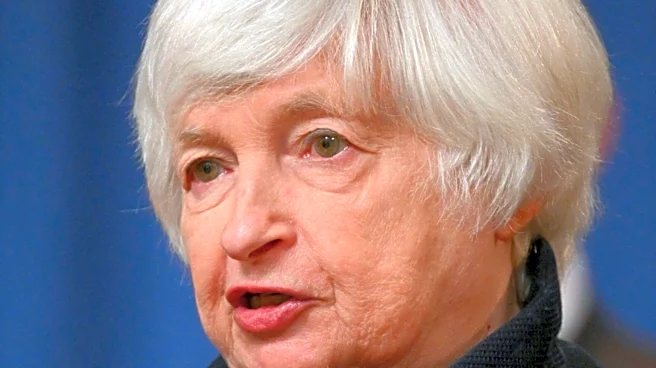
In April 2024, former US Treasury Secretary Janet Yellen issued a warning regarding Chinese industrial overcapacity, stating that it poses a significant threat to global markets and Western workers. This
claim, however, has been rejected by China, which attributes its export success to market forces, economies of scale, and integrated supply chains, rather than unfair manipulation. The term 'overcapacity' itself is described as a politically charged construct, often used to frame superior manufacturing efficiency as a market distortion. While state support has played a role in China's industrial growth, the debate centers on whether this constitutes an unfair advantage or a natural outcome of competitive market dynamics. The discussion highlights a broader tension between nations regarding trade practices and economic competitiveness.
Why It's Important?
The warning from former Secretary Yellen underscores ongoing economic tensions between the United States and China, particularly concerning manufacturing and global trade balances. If Chinese industrial overcapacity is indeed distorting global markets, it could lead to depressed prices for goods, reduced profitability for Western manufacturers, and potential job losses in industries competing with Chinese exports. This situation could prompt increased protectionist measures from Western countries, such as tariffs or trade barriers, aimed at shielding domestic industries. Such actions could escalate trade disputes, disrupt global supply chains, and potentially lead to higher costs for consumers. The debate also touches upon the fundamental principles of free trade versus managed trade, with significant implications for international economic policy and the future of global commerce.
What's Next?
The ongoing discussion surrounding Chinese industrial overcapacity is likely to continue influencing trade policies and diplomatic relations between the U.S. and China. Western nations may explore various strategies, including diplomatic pressure, trade investigations, and the implementation of new tariffs or subsidies for their own industries, to counter perceived market distortions. China, in turn, is expected to continue defending its economic model and export practices, potentially seeking to strengthen trade ties with other nations to mitigate the impact of any protectionist measures. The situation could also spur other countries to re-evaluate their own industrial policies, considering whether to adopt more aggressive state-backed strategies to compete or to focus on higher-value goods and services where direct competition with China is less intense. The trajectory of these economic dynamics will depend on ongoing negotiations and the willingness of major economic powers to find common ground.
Beyond the Headlines
Beyond the immediate economic implications, the debate over Chinese industrial overcapacity touches upon deeper issues of economic sovereignty, national industrial strategy, and the future of globalization. It raises questions about the role of government in fostering industrial growth and whether state intervention constitutes fair competition or market manipulation. The narrative also highlights a broader geopolitical struggle for economic influence and technological dominance. For developing nations, the situation presents a dilemma: whether to embrace free trade and risk being outcompeted by more efficient producers, or to implement protectionist policies that could stifle innovation and raise domestic costs. The long-term implications could include a re-shaping of global manufacturing hubs, increased regionalization of supply chains, and a re-evaluation of international trade rules to address the complexities of state-backed industrial policies.