

What's Happening?
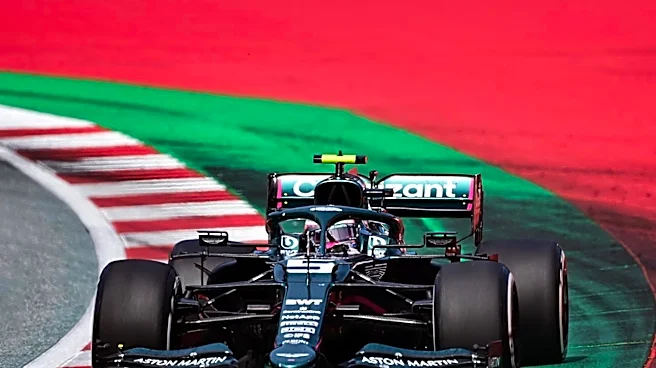
Lance Stroll, an Aston Martin driver, has voiced his dissatisfaction with the Honda engine upgrade introduced for the Dutch Grand Prix. Following two days of testing the new power unit package, Stroll stated that he felt 'not nearly enough' of a performance
improvement compared to the previous version. This sentiment came after he failed to advance past Q1 in qualifying at Zandvoort. Stroll further elaborated on the engine's 'inconsistent traits' and 'a lot of issues,' including problems with engine braking and rejected downshifts, which he described as a 'lottery.' His comments contrast with his teammate Fernando Alonso's more optimistic assessment of the upgrade, who noted a significant reduction in the gap to the leader over two races. Stroll's race at the Dutch Grand Prix ended in retirement after his car sustained early damage and he struggled with performance throughout the afternoon.
Why It's Important?
Stroll's critical assessment of the Honda engine upgrade highlights potential challenges for the Aston Martin team and its power unit supplier. In the highly competitive world of Formula 1, even marginal performance gains are crucial, and a perceived lack of improvement can significantly impact a team's standing and drivers' confidence. The discrepancy between Stroll's and Alonso's views could indicate varying driving styles or car setups that interact differently with the new engine, or it might point to inconsistent performance delivery from the power unit itself. For Honda, a key supplier, Stroll's comments could put pressure on their development efforts, especially as they aim to optimize the package further for power-critical circuits like Monza. The effectiveness of these upgrades directly influences a team's ability to compete for points and championships, affecting their financial prospects, sponsor relations, and overall brand image in the global motorsport arena.
What's Next?
Honda and Aston Martin are expected to continue their efforts to optimize the engine package for upcoming races, with a particular focus on the Italian Grand Prix at Monza. The goal is to extract additional performance, specifically 'a couple of tenths of a second,' which is vital for a high-speed circuit. Fernando Alonso indicated that significant changes would need to come from the factory in Japan, suggesting that immediate, trackside solutions are limited. This implies a longer-term development process for the power unit. The team will likely analyze data from the Dutch Grand Prix to address the inconsistencies and issues Stroll reported. The performance at Monza will be a critical indicator of whether these optimization efforts are successful and if the team can close the gap to their competitors. Stroll's future performance and his ability to adapt to or influence further engine developments will also be closely watched.
Beyond the Headlines
The differing opinions between teammates Lance Stroll and Fernando Alonso regarding the Honda engine upgrade underscore the complex interplay of driver feedback, technical development, and team dynamics in Formula 1. While Alonso's veteran experience might allow him to extract more from a challenging package or offer a more nuanced perspective, Stroll's direct criticism could reflect genuine technical shortcomings or a struggle to adapt to the engine's characteristics. This situation can create internal pressure within the team and between the team and its engine supplier. It also highlights the 'lottery' aspect Stroll mentioned, where the performance of a new component isn't always predictable or universally beneficial across all cars or drivers. Such discrepancies can influence strategic decisions, resource allocation for development, and even driver-team relationships, potentially impacting long-term competitiveness and the overall narrative surrounding the team's progress.