





What's Happening?
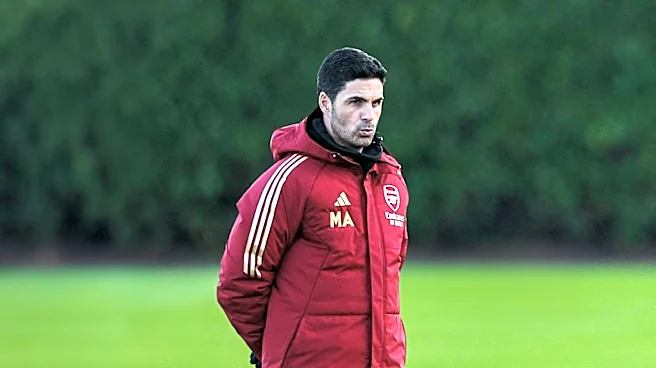
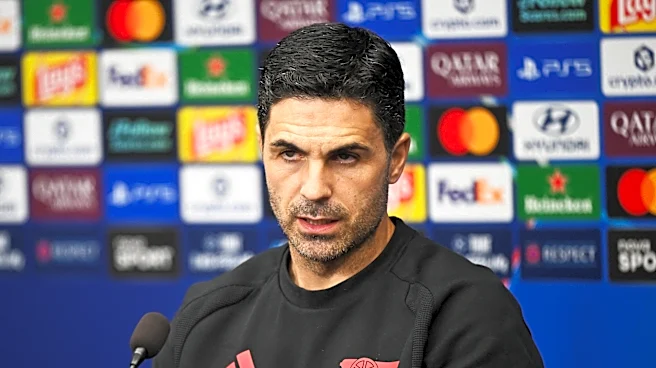
Arsenal manager Mikel Arteta has dismissed concerns regarding midfielder Declan Rice's fitness, despite observations of fatigue during the second half of a recent 2-1 victory against Slavia Prague. Arteta stated that the game 'required' Rice to play the full
90 minutes and highlighted that it was only his second game in a week, not his fifth, following a rest period before a match against Liverpool. He emphasized that players are expected to handle such demands and noted that Rice had 'very good moments' throughout the game. This comes after former Arsenal star Karen Carney expressed worries about the team's reliance on Rice, suggesting that Arsenal's performance declines when he appears tired. Carney described Rice as 'by far the best midfielder in the country' but noted that the team 'slightly fall apart a bit' when his energy wanes. Arteta, however, maintained that the team's overall standards dropped in the second half, attributing it to a loss of 'basics' rather than Rice's individual fatigue.
Why It's Important?
This situation highlights the critical role key players like Declan Rice play in top-tier football teams and the pressures managers face in balancing player welfare with performance demands. For Arsenal, Rice's consistent high-level performance is crucial for their competitive aspirations in both domestic and European competitions. Any perceived dip in his form or fitness could significantly impact the team's strategy and results. The debate also underscores the broader challenge in professional sports regarding player workload management, especially for athletes who are central to their team's success. The manager's decision to play a key player for the full duration, even when showing signs of fatigue, reflects the high stakes involved in competitive matches and the expectation for elite athletes to maintain peak performance. This dynamic can influence team morale, fan perception, and ultimately, the club's standing in the league and beyond.
What's Next?
Following Mikel Arteta's comments, the focus will likely remain on Declan Rice's performance and fitness in upcoming matches. Arsenal is scheduled to face Hull City in the Premier League, and observers will be keen to see if Rice's workload is managed differently or if his energy levels appear more consistent throughout the game. Arteta's stance suggests he will continue to utilize Rice as needed, indicating that the midfielder will likely remain a central figure in Arsenal's lineup. The club's medical and coaching staff will undoubtedly monitor Rice's condition closely to prevent burnout or injury. The ongoing discussion about player fatigue could also prompt broader conversations within the football community about fixture congestion and its impact on player health and performance, especially for teams competing on multiple fronts.
Beyond the Headlines
The discussion surrounding Declan Rice's fitness extends beyond individual player management to touch upon the broader philosophy of modern football. The increasing demands of multiple competitions, coupled with the intensity of the Premier League, place immense physical and mental strain on players. This scenario raises ethical questions about player welfare versus competitive advantage. While managers are driven by the need to win, the long-term health and career longevity of athletes are also critical considerations. The reliance on a single 'best midfielder' like Rice also exposes a potential vulnerability in team depth and strategy. Clubs might need to invest more in squad rotation and development to mitigate the impact of fatigue on key players, ensuring sustained performance without over-reliance on a few individuals. This incident serves as a microcosm of the larger challenges faced by elite football clubs in managing their most valuable assets.