
What's Happening?
A long-stalled Upper East Side development site in New York City, once envisioned for a 1,000-foot-plus skyscraper, is back on the market with a $360 million price tag. The six-parcel assemblage at 143-161
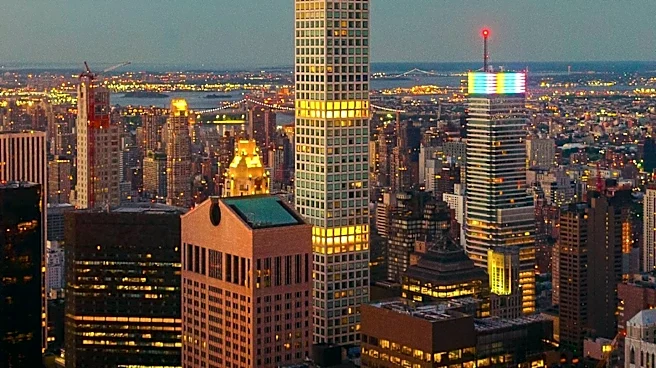
E. 60th St., located directly across from the Bloomingdale’s flagship store, last traded for $300 million in 2015. The previous low-rise buildings on the lot have since been demolished, leaving a cleared site with approximately 283,000 square feet of development potential. The property's zoning allows for residential or commercial development and has been marketed as permitting a tower without a height limit, attracting interest from some of New York's largest builders, including those with projects on Billionaires’ Row.
Why It's Important?
This $360 million vacant lot represents a rare and significant opportunity in New York City's highly competitive real estate market. Its potential for a supertall tower without height restrictions could dramatically alter the Manhattan skyline and extend the luxury development trend seen on Billionaires’ Row further east. The high asking price and the estimated $500 million in development costs for a high-end project, potentially reaching $1 billion for ultra-luxury, underscore the immense capital investment required for such ventures. The interest from major developers signals confidence in the long-term value of prime Manhattan real estate, despite the substantial financial commitment. This development could also influence property values in the surrounding Upper East Side area and impact the city's overall economic landscape.
What's Next?
The listing broker, Marlon Schwarcz, expects a deal to be reached within approximately 90 days, as offers from major developers have already begun to arrive. The next steps will involve negotiations and the selection of a developer who can secure the necessary financing and navigate the complexities of constructing a supertall tower in a dense urban environment. Once a developer is chosen, the project will move into the design and approval phases, which could take several years. The ultimate development could be either residential or commercial, with the potential to become a landmark addition to the city's skyline. The project's progress will be closely watched as an indicator of the health and direction of New York City's luxury real estate market.
Beyond the Headlines
The potential development of another supertall tower on the Upper East Side carries broader implications for urban planning, architectural innovation, and social equity in New York City. While such projects contribute to the city's iconic skyline and economic growth, they also raise questions about neighborhood character, infrastructure capacity, and the availability of affordable housing. The ability to build without a height limit on this site highlights the unique zoning allowances in certain areas, which can lead to significant architectural statements but also spark debates about urban density and shadow impacts. The project could also symbolize the ongoing transformation of Manhattan's luxury market, pushing the boundaries of design and exclusivity, while simultaneously challenging the city to balance development with community needs and historical preservation.