


What's Happening?
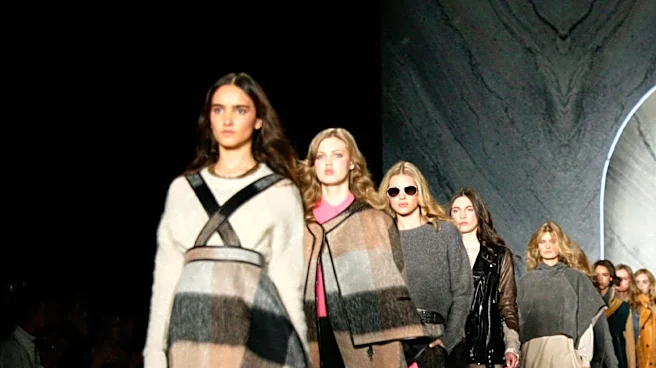
The global fashion industry is experiencing a significant shift, with new fashion centers emerging in cities like Lagos, Shanghai, and São Paulo, challenging the long-standing dominance of Paris, Milan, London, and New York. These new hubs are not merely
replicating the established model but are developing unique identities rooted in their local cultures, industries, and consumer bases. For instance, Lagos Fashion Week highlights Nigerian creativity, while Shanghai Fashion Week connects designers with China's vast consumer market. The article emphasizes that hosting a fashion week does not automatically create a fashion capital; rather, a sustainable fashion ecosystem requires designers, manufacturers, schools, buyers, investors, and skilled craftspeople.
Why It's Important?
This diversification of fashion capitals is crucial for the U.S. and global fashion industry as it broadens the scope of creative influence and market opportunities. For U.S. businesses, it means new markets to explore, potential collaborations, and a wider array of design inspirations. It also challenges the traditional hierarchical structure of fashion, promoting a more networked and decentralized system. This shift can lead to increased competition but also to greater innovation and cultural exchange. U.S. consumers may benefit from a wider variety of styles and products that reflect diverse global aesthetics, moving beyond a Eurocentric view of fashion. The emphasis on local success and infrastructure building in these emerging centers also highlights new models for sustainable industry growth.
What's Next?
The trend of fashion decentralization is expected to continue, with more cities investing in their local fashion ecosystems. This will likely lead to a more fragmented but richer global fashion calendar, where regional events gain increasing prominence. Designers from these emerging centers will have more opportunities to build successful businesses locally before considering international expansion, making global participation a choice rather than a necessity. The industry will likely see increased cross-cultural collaborations and a greater appreciation for diverse design philosophies. Traditional fashion capitals will need to adapt to this evolving landscape, potentially by fostering partnerships with these new hubs or by further specializing their offerings.
Beyond the Headlines
This development signifies a deeper cultural shift, where global narratives are becoming more inclusive and less dominated by Western perspectives. The idea that 'fashion doesn't need another capital; it needs more places allowed to matter' reflects a move towards recognizing and valuing diverse creative expressions. It also underscores the economic power of local industries and the importance of building robust infrastructure—including education, manufacturing, and intellectual property protections—to support creative talent. This evolution suggests a future where fashion is a constellation of influential centers, each contributing unique perspectives and fostering sustainable growth within their respective regions, ultimately enriching the global fashion dialogue.