





What's Happening?
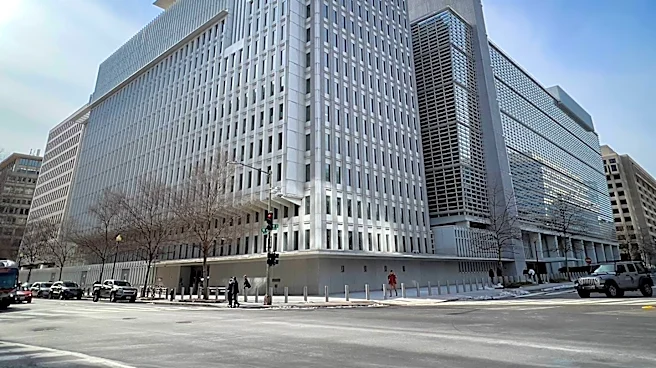
The International Monetary Fund (IMF) has pressed Pakistan to significantly limit the practice of government agencies directly awarding contracts to state-owned companies. The IMF's stance is that such deals should only be permitted under specific, clearly
justified circumstances. This recommendation is part of the IMF's broader efforts to promote good governance and reduce corruption in countries receiving financial assistance. The organization believes that unrestricted direct contracting can lead to inefficiencies, lack of transparency, and potential for corruption, undermining fair competition and economic development. This push from the IMF highlights a global concern regarding the integrity of public procurement processes and the need for robust oversight, especially in economies that are vulnerable to financial instability.
Why It's Important?
This directive from the IMF is important for several reasons. For Pakistan, it aims to foster a more competitive and transparent business environment, which can attract private investment and improve economic efficiency. By limiting direct contracts, the IMF seeks to reduce opportunities for rent-seeking and corruption, which can drain public resources and hinder sustainable growth. More broadly, this action underscores the IMF's role in influencing economic policy in member countries, particularly those in need of financial support. It reflects a growing international focus on governance and institutional reforms as critical components of economic stability and development. The implications extend to how state-owned enterprises operate and compete, potentially leading to a more level playing field for private sector businesses and ultimately benefiting the wider economy through improved resource allocation and reduced fiscal burdens.
What's Next?
Following the IMF's recommendation, Pakistan is expected to review and potentially revise its policies regarding government contracts with state-owned companies. This could involve implementing stricter guidelines, establishing clearer justification processes for direct awards, and enhancing oversight mechanisms. The IMF will likely monitor Pakistan's progress in adopting these reforms as part of its ongoing engagement and financial assistance programs. This move could also encourage other countries facing similar governance challenges to re-evaluate their public procurement practices. The long-term success of these reforms will depend on the political will to implement and enforce them effectively, potentially leading to a more transparent and accountable public sector in Pakistan.
Beyond the Headlines
Beyond the immediate policy changes, the IMF's intervention touches upon deeper issues of economic governance and the role of state-owned enterprises in developing economies. The practice of direct contracting often stems from historical legacies, strategic considerations, or a lack of developed private sector capacity. However, it can also become a conduit for political patronage and inefficient resource allocation. By pushing for restrictions, the IMF is advocating for a shift towards market-based principles and greater accountability, which can be challenging to implement in contexts where state-owned entities hold significant economic and political power. This move could spark broader debates about the optimal balance between state intervention and market forces, and the ethical responsibilities of governments in ensuring fair competition and preventing corruption in public spending.