





What's Happening?
Wholesale inflation in the U.S. accelerated in October, reaching its highest annual rate in nearly four years, according to data from the Bureau of Labor Statistics. The Producer Price Index (PPI) for final demand rose 0.3% from the previous month and 6.5%
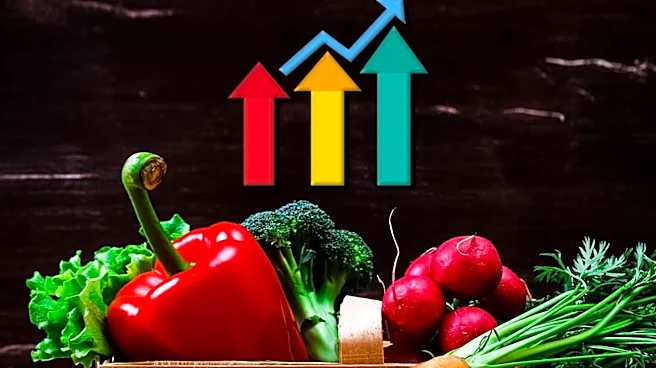
over the 12 months ending in October. This marks the largest annual gain since November 2022. A significant contributor to this increase was food prices, which climbed 1.3% in October, the fastest monthly hike since July 2022, following a 1.1% rise in September. Within the food sector, fresh and dry vegetable prices saw a substantial jump of 26.7% in October, building on a 30.7% leap in September. High diesel costs continue to impact transportation and warehousing expenses, which in turn affect the prices of produce and other goods. Excluding volatile gas and food prices, core PPI increased 0.3% monthly and 5% annually, matching the rate seen in January 2023. The report also noted that electronic components and accessories rose 4.2% in October, their highest pace in six months, and are up 31.7% year-over-year, an all-time high since December 1966.
Why It's Important?
The surge in wholesale prices is a critical indicator for future consumer inflation, as producer prices typically precede consumer prices. This sustained increase suggests that American consumers are likely to face higher costs for goods in the coming months, exacerbating the existing affordability crisis. The broad nature of the inflation, extending beyond energy to food and other manufactured products, indicates a more entrenched problem. The rising costs for businesses, particularly in transportation and warehousing due to elevated diesel prices, will likely be passed on to consumers. This inflationary pressure puts additional strain on the Federal Reserve, increasing the likelihood of further interest rate hikes. Economists like Christopher Rupkey, chief economist at FwdBonds, warn that consumers will bear the brunt of this 'fresh burst of factory inflation,' making it harder for households to manage their budgets. The data also highlights the impact of supply chain disruptions and energy costs on various sectors of the economy.
What's Next?
The latest PPI data, combined with a hotter-than-expected Consumer Price Index (CPI) report for October, is expected to influence the Federal Reserve's monetary policy decisions. Markets are largely anticipating a quarter-point interest rate hike at the Fed's early December meeting. However, some officials, like Fed Governor Christopher Waller, have suggested that a half-point hike might be necessary given the persistent inflationary pressures. Ben Ayers, Nationwide senior economist, indicated that the Fed might not stop there, as lingering impacts from fuel price spikes could extend into 2027, potentially necessitating further tightening to curb second and third-order inflation effects. Businesses will likely continue to grapple with elevated input costs, which could lead to further price adjustments for consumers. Policymakers will closely monitor upcoming inflation data to determine the appropriate pace and magnitude of future rate adjustments, balancing the need to control inflation with the risk of slowing economic growth.
Beyond the Headlines
The current inflationary trend reveals deeper vulnerabilities within U.S. supply chains and the broader economy. The significant impact of diesel costs on transportation and food prices underscores the interconnectedness of energy markets and everyday consumer goods. This situation highlights the challenges businesses face in absorbing rising operational costs, often leading to price increases for end-users. The record-high annual increase in electronic components and accessories also points to inflationary pressures stemming from technological investments, such as those in artificial intelligence, which could have long-term implications for various industries. The Federal Reserve's response to this broadening inflation will be crucial, as aggressive rate hikes could cool the economy but also risk a slowdown in hiring and economic activity. This scenario could lead to a prolonged period of higher prices and potentially impact consumer spending patterns and overall economic stability, prompting a re-evaluation of supply chain resilience and energy independence strategies.