





What's Happening?
The International Finance Corporation (IFC), a member of the World Bank Group, and Citibank, N.A. (Citi) have announced a new trade finance facility totaling up to $2 billion. This initiative aims to expand access to trade financing for small and medium-sized
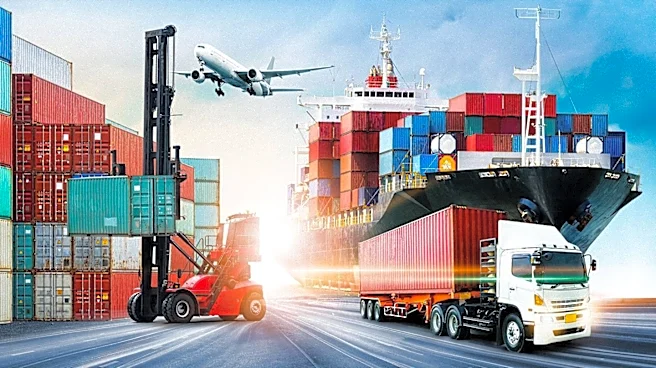
enterprises (SMEs) and corporate businesses across Africa, Asia, and Latin America. Under the agreement, IFC will provide guarantees of up to $1 billion to Citi, which will commit an equivalent amount, forming the combined $2 billion facility. The IFC's guarantees are designed to free up Citi's balance-sheet capacity, allowing Citi to deploy additional lending to businesses in these regions. This partnership seeks to address a significant global trade finance gap, estimated at $2.5 trillion, which disproportionately affects developing countries where businesses often struggle to obtain necessary trade instruments like letters of credit and guarantees due to high risks and limited bank capacity. The facility is expected to support over 100 companies in target markets over the next three years.
Why It's Important?
This collaboration is crucial for fostering economic growth and job creation in developing economies. The substantial trade finance gap in these regions hinders businesses from moving goods across borders, impacting supply chains and overall economic development. By providing guarantees, IFC enables Citi to extend more credit, thereby facilitating trade and supporting the operational needs of SMEs, which are often the backbone of local economies. This increased access to financing can help these businesses expand, create jobs, and integrate more effectively into global trade networks. Furthermore, Citi has committed to deploying a minimum of $500 million of its own trade financing specifically to companies operating in sectors with climate benefits, such as renewable energy, water and sanitation infrastructure, energy-efficient manufacturing, and sustainable agriculture. This dual focus not only addresses immediate financial needs but also promotes sustainable development and climate resilience in emerging markets.
What's Next?
Over the next three years, the IFC-Citi trade finance facility will begin operations across multiple countries in Africa, Asia, and Latin America, with plans for further expansion. The immediate next steps involve the deployment of the combined $2 billion in financing to corporate and SME businesses requiring trade finance. This will include identifying eligible companies and facilitating their access to letters of credit, guarantees, and other short-term trade instruments. The initiative will also focus on channeling at least $500 million into climate-beneficial sectors, aligning with global sustainability goals. Success will be measured by the number of companies supported, the volume of trade facilitated, and the impact on job creation. The partnership may also serve as a model for future collaborations between development finance institutions and commercial banks to address similar financing gaps in other critical sectors and regions.
Beyond the Headlines
The IFC-Citi partnership highlights a broader trend in development finance where blended finance solutions are increasingly used to mobilize private capital into challenging markets. By mitigating risks for commercial banks through guarantees, institutions like IFC can unlock significant private sector investment that would otherwise be hesitant to enter these markets. This approach not only addresses immediate financing needs but also helps build more robust financial ecosystems in developing countries. The explicit focus on climate-benefit sectors within the facility underscores the growing integration of environmental, social, and governance (ESG) considerations into mainstream finance. This signals a shift towards recognizing that economic development and climate action are not mutually exclusive but rather interdependent, encouraging businesses to adopt more sustainable practices while pursuing growth opportunities. Such initiatives can lead to long-term structural changes in how trade is financed and how sustainable development is pursued globally.