





What's Happening?
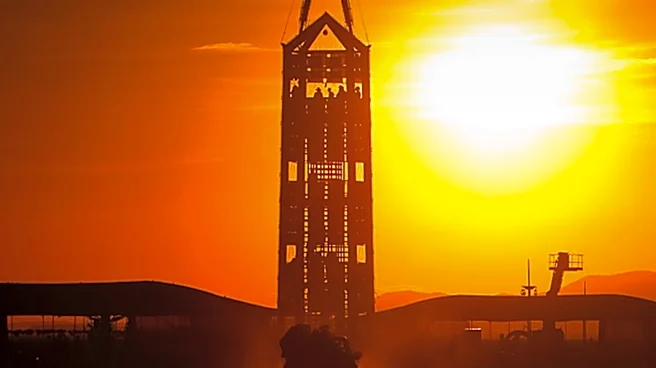
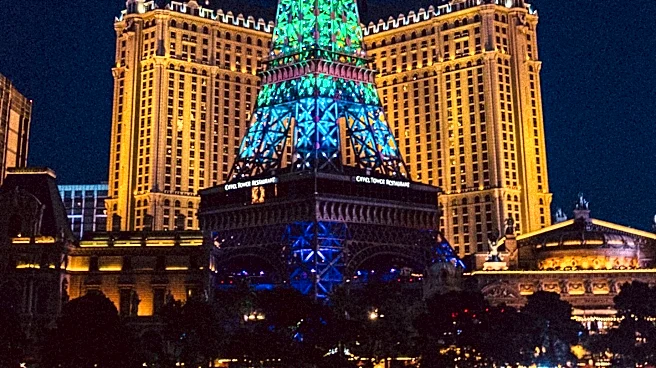
A giant replica of the Eiffel Tower, a prominent art installation at this year's Burning Man festival in the Black Rock Desert, Nevada, is slated for complete dismantling and repurposing after the event. The structure, which became a highly photographed
landmark within Black Rock City, the temporary metropolis of Burning Man, will not remain in the desert. In adherence to the festival's core 'Leave No Trace' principle, every component of the tower will be carefully taken apart, transported, sorted, and then reused in future artistic and community projects. This process ensures that nothing, not even a screw or a piece of wood, is left behind. The temporary nature of such monumental art is a defining characteristic of Burning Man, where creations exist for a few days or weeks before being transformed or removed.
Why It's Important?
The dismantling and repurposing of the Eiffel Tower replica at Burning Man highlights the festival's commitment to environmental responsibility and its unique approach to art and community. The 'Leave No Trace' principle is a significant aspect of the event's ethos, demonstrating a model for large-scale temporary gatherings to minimize their ecological footprint. This practice contrasts with traditional monuments built for permanence, emphasizing the value of ephemeral art and collective creation over lasting physical structures. The reuse of materials fosters a sustainable artistic cycle, where components from one installation can inspire and contribute to new works, promoting resourcefulness and innovation within the artistic community. This approach also challenges conventional notions of artistic preservation, suggesting that transformation can be a form of longevity for art.
What's Next?
Following the conclusion of the Burning Man festival, the immediate next step for the Eiffel Tower replica is its meticulous dismantling. This process will involve teams carefully identifying reusable elements, protecting fragile parts, and separating materials such as metal, wood, cables, and lighting components. The recovered materials will then be sorted, with some designated for future sculptures, sets, workshops, or installations at other events. Materials deemed too worn will be recycled according to their nature. This organized effort, though less visible than the initial construction, is crucial for upholding the 'Leave No Trace' principle and ensuring the sustainable lifecycle of the art installation's components. The idea behind this is that the work is not destroyed but merely changes form, continuing to circulate in new creative endeavors.
Beyond the Headlines
The temporary existence and planned transformation of the Eiffel Tower replica at Burning Man offer a deeper commentary on the nature of art, community, and environmental consciousness. Unlike permanent public art, this installation's transient nature imbues each moment of its existence with a unique, almost fragile value. It underscores the idea that profound impact does not necessitate eternal presence. Ethically, the 'Leave No Trace' principle promotes a strong sense of collective responsibility and respect for the environment, challenging the consumerist tendency to leave waste behind. Culturally, it fosters a collaborative spirit where the act of building and dismantling together is as significant as the final product, and the materials themselves become a reservoir of stories and potential for future creations. This approach encourages a mindset of continuous creation and adaptation, rather than static preservation.