







What's Happening?
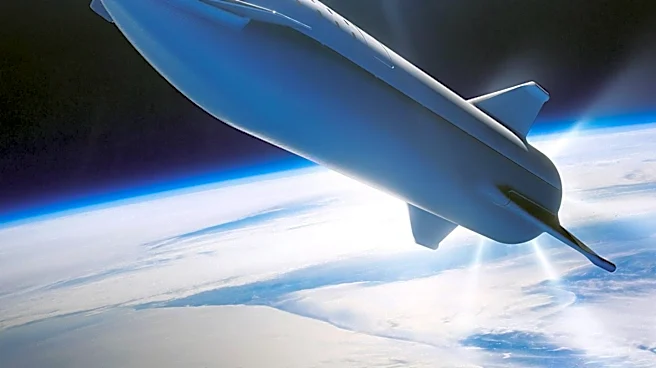
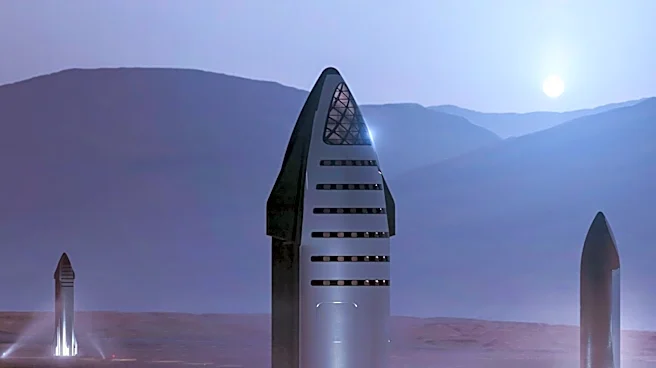
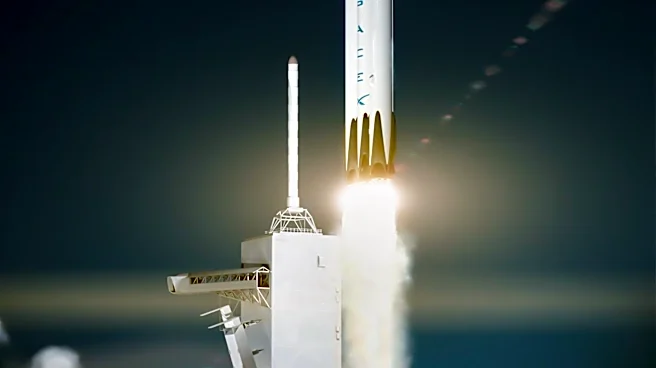
The Japanese company ispace has announced a significant expansion of its lunar ambitions by booking 1,100 pounds of cargo space on SpaceX's Starship for a mission to the moon, scheduled for no earlier than 2030. This mission will utilize SpaceX's Starship,
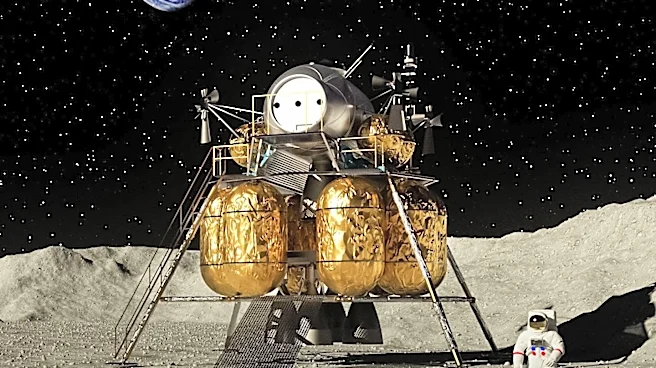
a super-heavy-lift launch vehicle designed for full reusability, capable of launching up to 150 tons to low Earth orbit. ispace has previously attempted lunar landings with its HAKUTO-R moon rover, launched on SpaceX's Falcon 9 rockets in 2022 and 2025, both of which reached lunar orbit but crashed during landing attempts. The new mission aims to deploy ispace's Mobile Cargo System, a flat rover capable of transporting up to 1,100 pounds across the lunar surface. The timeline for this mission is contingent on SpaceX's progress in developing Starship into an operational vehicle.
Why It's Important?
This development marks a significant step in the commercial exploration of the moon, highlighting the growing collaboration between private companies in space exploration. The partnership between ispace and SpaceX underscores the increasing role of private enterprises in advancing lunar missions, which were traditionally dominated by national space agencies. The success of this mission could pave the way for more frequent and cost-effective lunar transport, potentially accelerating the establishment of a sustainable lunar economy. This could benefit various industries, including technology, construction, and communications, by providing new opportunities for research, resource extraction, and infrastructure development on the moon.
What's Next?
The success of this mission will depend on SpaceX's ability to overcome the technical challenges associated with developing Starship into a fully operational vehicle. If successful, ispace plans to become a regular customer of Starship, using it to transport its Mobile Cargo System and other payloads to the lunar surface. This mission could also influence the timelines and strategies of other companies and space agencies involved in lunar exploration, potentially leading to increased competition and collaboration in the sector. Additionally, the mission's outcome could impact the schedules of NASA's Artemis program, which also plans to use Starship for its lunar landings.