





What's Happening?
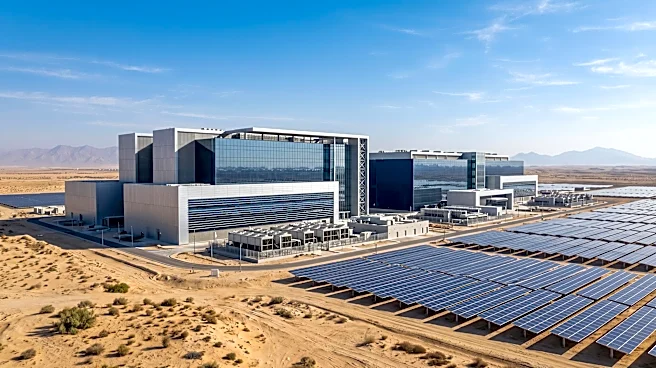
Abu Dhabi is developing a massive AI campus, spanning 19.2 square kilometers and designed for 5 GW of power, which will include OpenAI's first 'Stargate' facility outside the U.S. This 'Stargate UAE' will be a 1 GW cluster, significantly larger than OpenAI's flagship
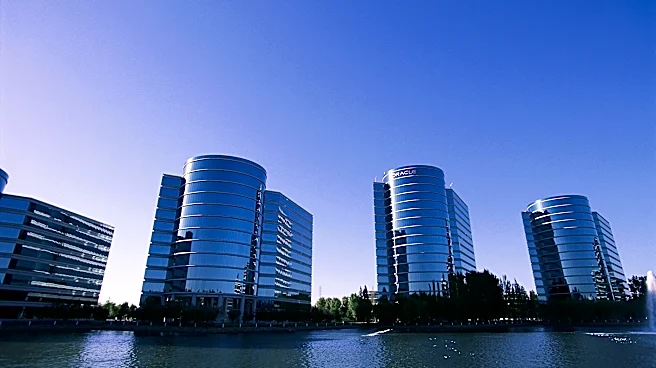
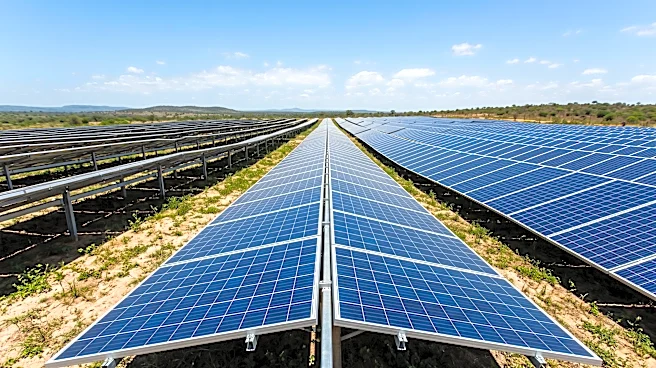
1.2 GW Stargate in Abilene, Texas. The project is led by G42, with Khazna Data Centers, the UAE's largest operator, handling construction. OpenAI and Oracle will operate the facility, while NVIDIA will supply Grace Blackwell GB300 systems. Cisco is providing network and security infrastructure, and SoftBank is a partner. The initial phase includes two 100 MW buildings. The campus is supported by a diverse power supply, including 5.6 GW from Barakah's nuclear reactors, 5.2 GW of solar power with 19 GWh of batteries from Masdar and EWEC, and a 1 GW gas plant from TAQA. The project is a joint UAE-American endeavor, with an estimated cost exceeding $30 billion.
Why It's Important?
This ambitious AI campus signifies a major step in global AI infrastructure development and strengthens the technological partnership between the UAE and the U.S. The U.S. has granted licenses for Microsoft and G42 to ship advanced chips, including GB300s, to the UAE, positioning the UAE as a close partner in AI development. The scale of this project, particularly its power requirements and the involvement of major U.S. tech companies like OpenAI, Oracle, and NVIDIA, underscores the strategic importance of AI capabilities. For the U.S., this collaboration could foster innovation, expand market reach for its tech companies, and potentially influence global AI standards. The investment by Microsoft and the establishment of OpenAI's first international Stargate facility highlight the UAE's growing role as a global AI hub, attracting significant capital and talent. This development could also set a precedent for future international collaborations in advanced technology sectors.
What's Next?
The Stargate UAE campus is expected to continue its phased development, with the first 200 MW already in two 100 MW buildings. The ongoing arrival of advanced chips, facilitated by U.S. licenses, will enable the campus to scale its operations. Microsoft's substantial investment in G42 and the UAE through 2029 indicates a long-term commitment to the region's AI ecosystem. OpenAI's deal to enable ChatGPT nationwide in the UAE suggests a rapid integration of advanced AI services into the country's economy and public sector. Further deployments, such as ADNOC Group's use of OpenAI Frontier for energy forecasting, are anticipated. The campus is designed to serve a vast population within a 3,200 km radius of Abu Dhabi, suggesting future expansion of AI services and applications across various industries in the region.
Beyond the Headlines
The establishment of such a large-scale AI campus in Abu Dhabi, with significant U.S. involvement, raises broader implications regarding data sovereignty, ethical AI development, and geopolitical influence in the technological sphere. The UAE's high adoption rate of AI among its working-age population, coupled with the campus's capacity to serve nearly half the world's population, positions it as a critical player in shaping future AI landscapes. The collaboration between U.S. and UAE entities in funding, technology supply, and operation could lead to the development of new international standards for AI infrastructure and governance. This initiative also highlights the increasing decentralization of advanced technological hubs beyond traditional centers, potentially fostering a more diverse and globally distributed AI ecosystem. The integration of AI into critical sectors like energy, as seen with ADNOC, suggests a future where AI plays a fundamental role in national economic strategies.