





What's Happening?
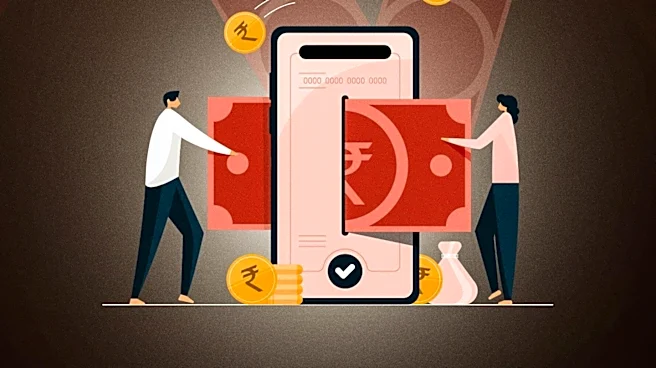
Financial and mobile banking applications are fundamentally changing how individuals manage their money, shifting from traditional physical bank visits to digital platforms. These apps allow users to perform various financial tasks directly from their smartphones,
including checking balances, transferring funds, paying bills, tracking spending, and investing. The ecosystem of financial apps is diverse, encompassing mobile banking apps provided by traditional banks, digital-only banks (Neobanks), financial planning and budgeting tools, and investment and fintech applications. This digital transformation offers significant benefits such as enhanced convenience, real-time visibility into financial accounts, and automation of savings and investments. The shift is driven by a consumer demand for greater control over their finances without the friction of paperwork and long waiting times, enabling most financial tasks to be completed in seconds.
Why It's Important?
The widespread adoption of financial applications holds significant importance for the U.S. financial industry and consumers. For individuals, these apps democratize access to sophisticated financial tools, previously available only through traditional institutions, by offering features like automated savings, investment opportunities, and detailed spending categorization. This increased accessibility can lead to improved financial literacy and better personal financial management, potentially boosting individual savings rates and investment participation. For the financial sector, it signifies a major shift towards digital-first strategies, compelling traditional banks to innovate and compete with agile fintech companies. The emphasis on robust security features like encryption, multi-factor authentication, and fraud detection within these apps is crucial for maintaining consumer trust and protecting sensitive financial data, which is paramount in the U.S. regulatory landscape.
What's Next?
The future of financial applications is likely to see continued innovation, with an increasing focus on integrating advanced technologies like artificial intelligence and machine learning to offer more personalized financial advice and predictive analytics. The trend towards 'no-code' platforms for fintech app development suggests a future where financial services can be rapidly deployed and customized, potentially lowering barriers to entry for new financial products and services. This could lead to a more competitive and dynamic financial market, offering consumers a wider array of specialized tools. Furthermore, as these applications become more central to daily financial life, regulatory bodies in the U.S. will likely continue to evolve their oversight to ensure consumer protection, data privacy, and systemic stability, particularly concerning the security and compliance of financial data handling.
Beyond the Headlines
Beyond the immediate convenience, the proliferation of financial applications is fostering a profound cultural shift in how individuals perceive and interact with their money. The constant, real-time visibility into spending and savings cultivates a heightened sense of financial awareness and discipline, moving away from reliance on memory or infrequent bank statements. This shift from 'willpower' to 'automated discipline' through features like recurring deposits and automatic categorization can fundamentally alter long-term financial habits. Moreover, the integration of various financial services into a unified digital ecosystem raises ethical considerations regarding data privacy and the potential for algorithmic bias in financial recommendations. The long-term implications include a more financially engaged populace, but also the need for continuous vigilance in ensuring equitable access, data security, and transparent algorithmic practices within this evolving digital financial landscape.