









What's Happening?
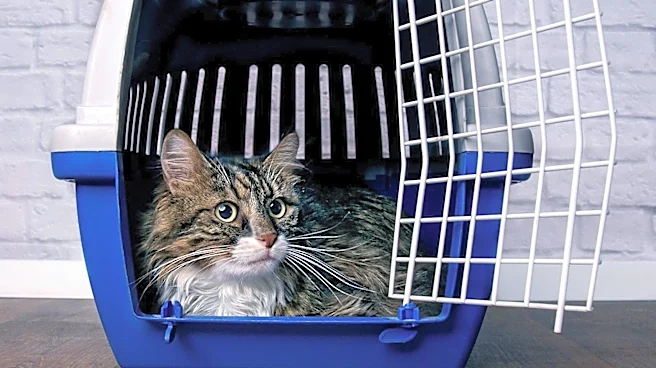
A recent article highlights the challenges faced by adopters of shelter cats that have experienced neglect or abandonment. The story of Mr. Wobbles, a one-year-old cat from June's Senior Cat Rescue in New Mexico, exemplifies these challenges. After being
left by his previous owner with a deformed leg, Mr. Wobbles underwent amputation and is now ready for adoption. Dr. Tom Vega, a veterinarian, provides insights into how adopters can help such cats learn to trust again. He emphasizes the importance of creating a predictable environment and allowing the cat to adjust at its own pace. Vega advises against overwhelming the cat with affection too quickly and suggests rewarding moments of bravery with treats and toys.
Why It's Important?
The process of adopting a traumatized shelter cat is significant as it involves understanding and patience from the adopter. This story sheds light on the broader issue of animal welfare and the responsibilities of pet ownership. By following expert advice, adopters can help these animals transition into a safe and loving environment, ultimately reducing the number of animals that are returned to shelters. This approach not only benefits the individual animals but also supports the overall mission of animal rescue organizations by ensuring successful adoptions. The guidance provided by experts like Dr. Vega is crucial in educating the public on how to handle the unique needs of rescue animals.
What's Next?
For Mr. Wobbles and other cats like him, the next steps involve finding a suitable home where they can continue to heal and build trust. Potential adopters are encouraged to follow the advice of experts to ensure a smooth transition. Animal rescue organizations may continue to provide support and resources to adopters to facilitate successful adoptions. Additionally, there may be ongoing efforts to raise awareness about the needs of rescue animals and the importance of adopting from shelters.
Beyond the Headlines
The story of Mr. Wobbles also highlights the resilience of animals and their ability to adapt to new circumstances, such as living with a disability. This can inspire broader discussions about the capabilities of animals and the importance of providing them with opportunities to thrive. It also underscores the ethical responsibility of pet owners to provide a nurturing environment for animals that have experienced trauma. The narrative encourages a compassionate approach to animal welfare and the importance of considering the individual needs of each animal.