





What's Happening?
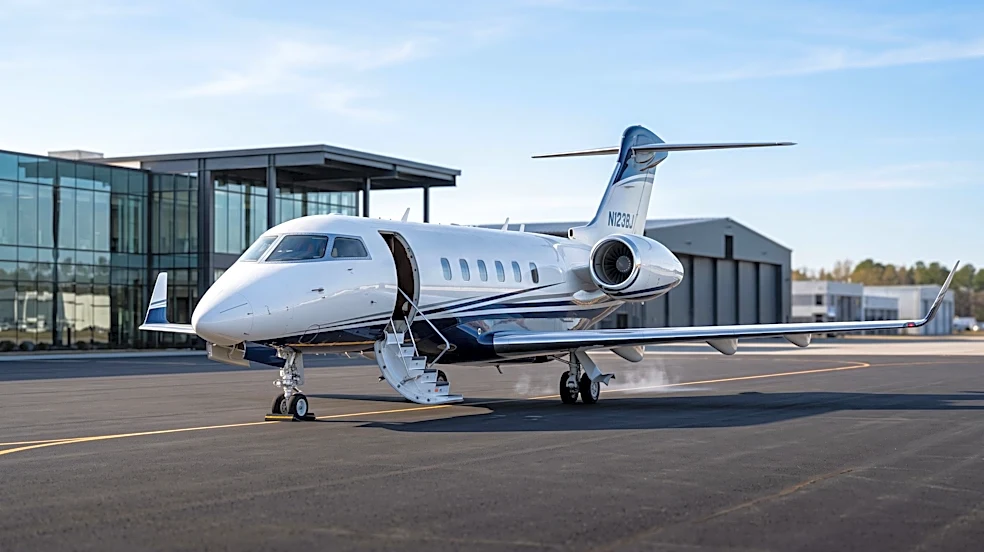
According to Avinode, a leading online marketplace for air charter, the demand for U.S. business aviation charter services has surged by 27% over the last year. This significant increase indicates a robust and growing market for private air travel within
the United States. Despite this substantial rise in demand, the number of departures has remained stable. This suggests that while more individuals and businesses are seeking private charter options, the existing infrastructure and fleet are managing the increased volume without a proportional increase in flight frequency. The report highlights a dynamic period for the business aviation sector, characterized by heightened interest and utilization of charter services across the country.
Why It's Important?
This 27% increase in U.S. charter demand is a critical indicator of economic activity and shifting travel preferences. For the business aviation industry, it signifies a period of strong growth and potential for further expansion, benefiting charter operators, aircraft manufacturers, and maintenance providers. The stability in departures despite rising demand could point to more efficient use of existing aircraft or a higher load factor per flight, optimizing operational costs for charter companies. This trend also suggests that businesses and high-net-worth individuals are increasingly valuing the flexibility, efficiency, and privacy offered by private air travel, potentially as a long-term shift rather than a temporary response to external factors. The sustained demand could lead to increased investment in new aircraft and infrastructure, creating jobs and stimulating economic growth within the aviation sector and related industries.
What's Next?
The continued growth in U.S. business aviation charter demand is likely to prompt further investment and innovation within the sector. Charter companies may look to expand their fleets, upgrade existing aircraft, and enhance their service offerings to meet the sustained demand. This could also lead to increased competition among providers, potentially driving down costs or improving service quality for consumers. Additionally, the industry might explore technological advancements to optimize flight scheduling and operational efficiency, especially if departure numbers remain stable while demand continues to climb. Regulatory bodies may also begin to assess the implications of increased private air traffic on airspace management and environmental considerations. The trend suggests a sustained period of growth for business aviation, with potential for new market entrants and expanded services.
Beyond the Headlines
The surge in U.S. business aviation charter demand reflects broader societal and economic shifts. It highlights a growing preference for personalized and efficient travel solutions, particularly among businesses and affluent individuals who prioritize time savings and privacy. This trend could also be influenced by evolving corporate travel policies, where private charters are seen as a more productive and secure alternative to commercial flights. Environmentally, the increased use of private jets raises questions about carbon emissions and sustainability, potentially spurring innovation in eco-friendly aviation technologies or carbon offset programs within the industry. Culturally, it reinforces the perception of private air travel as a symbol of status and efficiency, further embedding it into the fabric of high-end business and leisure travel. The long-term implications could include a more stratified air travel market, with distinct segments for commercial and private aviation, each evolving to meet specific consumer needs.