





What's Happening?
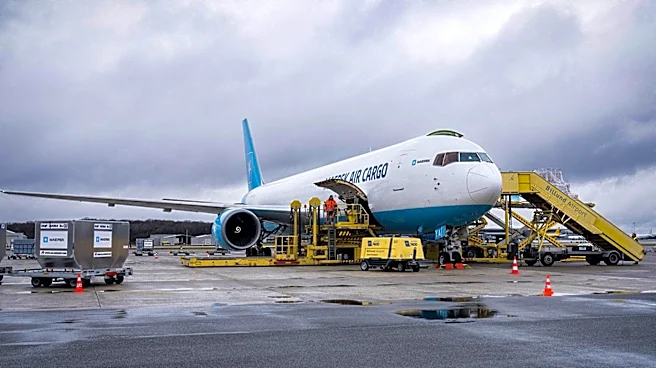
DHL Air has officially begun revenue operations with its first two B777-200LR(MF) aircraft, becoming the inaugural operator of this Mammoth Freighters-converted type. These aircraft, identified as G-DHMH and G-DHME, are now actively deployed on international
cargo routes. According to ADS-B data, their services connect major global hubs including Nottingham East Midlands, Leipzig/Halle, Cincinnati International, Singapore Changi, and Hong Kong International. DHL Express has made a commitment to acquire a total of thirteen B777-200LR(MF)s. This move is part of DHL's strategy to significantly enhance its long-haul cargo capabilities. The B777-200LR(MF) models are converted passenger-to-freighter aircraft, designed to offer extended range for cargo operations. This expansion follows previous plans by DHL to integrate four of these aircraft into its fleet during 2026, underscoring a strategic investment in its global logistics network.
Why It's Important?
The introduction of the B777-200LR(MF) freighters by DHL Air is a significant development for the global logistics and air cargo industry, particularly impacting U.S. trade routes. By expanding its long-haul cargo capacity, DHL is better positioned to meet the increasing demand for international shipping, which directly benefits U.S. businesses involved in import and export. The deployment of these aircraft on routes connecting Cincinnati International highlights the strategic importance of U.S. hubs in DHL's global network. This enhanced capacity can lead to more efficient and potentially faster delivery times for goods entering and leaving the U.S., supporting supply chain resilience. Companies relying on DHL for their international freight stand to gain from improved service reliability and expanded reach. Conversely, competitors in the air cargo sector may face increased pressure to upgrade their fleets and services to match DHL's expanded capabilities, potentially driving further innovation and investment across the industry.
What's Next?
DHL Express is committed to integrating a total of thirteen B777-200LR(MF) aircraft into its fleet, indicating a phased rollout beyond the initial two. This suggests a continued expansion of their long-haul cargo network and increased frequency on existing and new routes. The successful deployment of these first two freighters will likely inform the subsequent integration of the remaining aircraft, potentially leading to further optimization of DHL's global logistics operations. Other air cargo carriers will be closely monitoring DHL's performance with these new freighters, which could influence their own fleet modernization and expansion strategies. The increased cargo capacity could also lead to adjustments in pricing and service offerings across the industry as competition intensifies. Furthermore, the enhanced connectivity to U.S. hubs like Cincinnati International could attract more businesses to utilize DHL's services for their international shipping needs.
Beyond the Headlines
The adoption of converted passenger-to-freighter aircraft like the B777-200LR(MF) by DHL Air reflects a broader trend in the aviation industry to repurpose older passenger jets for cargo operations. This approach offers several advantages, including cost-effectiveness compared to purchasing new dedicated freighters and a more sustainable use of existing aircraft assets. From an environmental perspective, extending the life of aircraft through conversion can reduce the overall carbon footprint associated with manufacturing new planes. This strategy also highlights the adaptability of the aviation sector in responding to evolving market demands, particularly the surge in e-commerce and global supply chain needs. The long-range capabilities of these freighters underscore the increasing globalization of trade and the critical role of efficient air logistics in connecting distant markets, influencing economic development and trade policies worldwide.