


What's Happening?
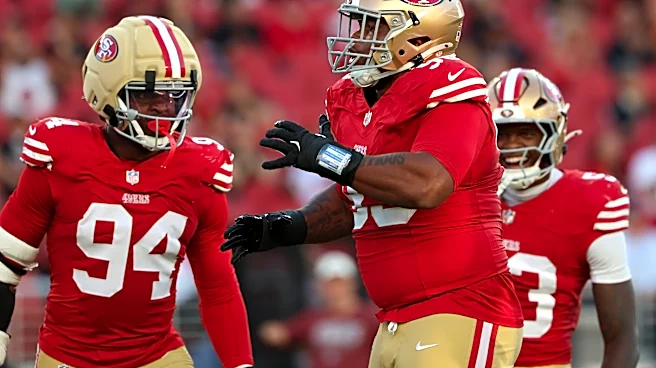
Former NFL offensive lineman Geoff Schwartz has publicly criticized the San Francisco 49ers' front office for its drafting strategy over the past four years, asserting that the team has drafted poorly, particularly in the first round. Appearing on 'First
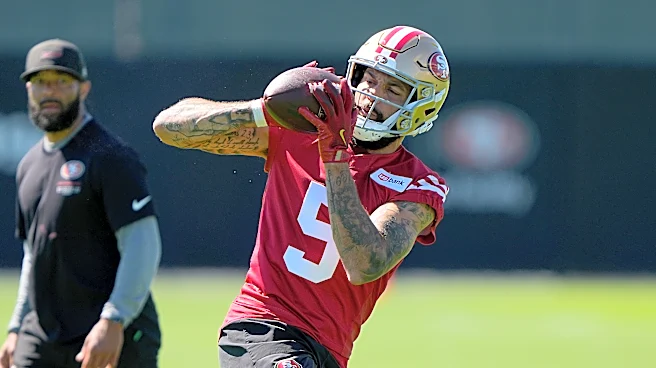
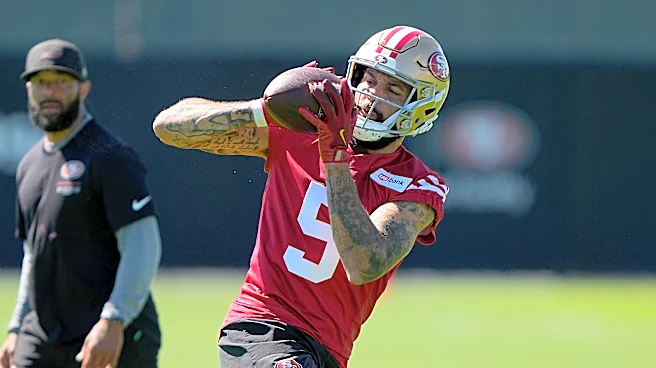
Things First,' Schwartz stated that beyond the team's well-documented injury issues, the lack of impact players from recent drafts is a significant problem. He highlighted the 2021 trade for Trey Lance, which involved three future first-round picks, as a prime example of a misstep, noting Lance started only four games before being traded. Schwartz also mentioned third-year wide receiver Ricky Pearsall and second-year defensive end Mykel Williams as first-round misses, citing Pearsall's injury history and Williams' season-ending ACL tear in his rookie year. This criticism suggests a deeper issue within the 49ers' organizational strategy beyond just player health.
Why It's Important?
This criticism from a former NFL player like Geoff Schwartz is important because it shines a light on the long-term sustainability and competitive health of an NFL franchise. Poor drafting can severely impact a team's ability to build a strong roster, leading to a reliance on expensive free agents or a decline in overall performance. For the 49ers, a team that has seen recent success, these comments suggest that their foundation might be weaker than perceived. The inability to consistently draft impact players, especially in early rounds, means the team struggles to backfill positions when veteran players get injured or age out. This can lead to a cycle of underperformance and increased pressure on the coaching staff and remaining star players, potentially affecting fan engagement and the team's market value in the long run. The financial implications of trading away high draft picks for players who don't pan out, like Trey Lance, also represent significant lost opportunities for cost-effective talent acquisition.
What's Next?
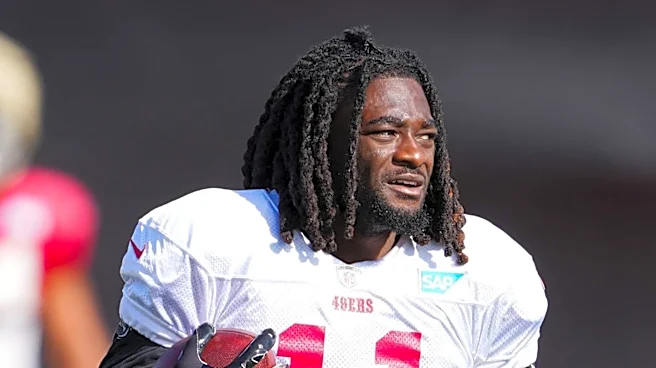
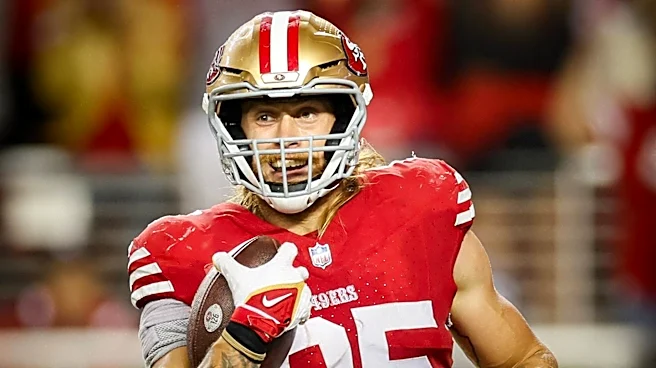
The 49ers' front office, led by general manager John Lynch, will likely face increased scrutiny regarding their future draft decisions and overall roster management. With criticisms from analysts like Mel Kiper Jr. also highlighting questionable draft choices, the pressure to perform well in upcoming drafts will intensify. The performance of recent draft picks, such as wide receiver De’Zhaun Stribling, edge rusher Romello Height, and running back Kaelon Black, will be closely watched to see if they can defy initial 'reach' assessments and develop into impact players. If these players do not pan out, the team may need to re-evaluate its scouting and drafting philosophy. The ongoing health issues of players like Ricky Pearsall and Mykel Williams will also continue to be a factor, emphasizing the need for depth that can only be consistently built through successful drafting.
Beyond the Headlines
Beyond the immediate concerns of player performance and draft strategy, this situation highlights a broader challenge in professional sports: the balance between aggressive moves for immediate success and sustainable long-term team building. The 49ers' decision to trade significant draft capital for Trey Lance, a high-risk, high-reward move, exemplifies this tension. While such gambles can pay off, their failure can set a franchise back for years. This also touches upon the evolving role of analytics and traditional scouting in player evaluation. When a general manager 'goes off the board' for desired players, as Kiper Jr. noted, it raises questions about the internal valuation process versus consensus expert opinions. The long-term implications could include a shift in how NFL teams approach draft capital, potentially leading to more conservative strategies or a renewed focus on developing internal scouting talent to avoid perceived 'reaches' and ensure a steady pipeline of impact players.