






What's Happening?
Director Taylor Sheridan reportedly challenged 'Lioness' actress Jill Wagner to relearn a scene using her non-dominant hand just minutes before filming. Wagner, 47, recounted the experience to People, describing how Sheridan 'forces you to run into fire.'
The incident occurred during a scene where Wagner's character, Bobby, and co-star Laysla De Oliveira's character, Cruz, were clearing a room. They were encountering difficulties with certain angles, leading Sheridan to request Wagner switch her weapon to her left arm. Despite the immediate challenge, Wagner stated that they 'worked it out' and it would likely be one of her 'favorite moments' from the production. De Oliveira, 34, echoed this sentiment, noting that Sheridan's ability to change things on the spot is a 'coolest thing' about working with him, fostering a sense of accomplishment among the cast.
Why It's Important?
This approach to directing, while demanding, highlights a unique methodology in the entertainment industry that can significantly impact actor performance and production quality. By pushing actors out of their comfort zones with last-minute changes, Sheridan aims to elicit more authentic and spontaneous reactions, potentially leading to more compelling on-screen portrayals. This method can be a double-edged sword; while it can foster resilience and adaptability in actors, it also places immense pressure on them and the production crew. For the 'Lioness' series, this could contribute to its reputation for intense and realistic action sequences. It also speaks to a broader trend in filmmaking where directors employ unconventional techniques to achieve specific artistic visions, influencing how actors prepare and perform in high-stakes roles. The success of such methods can elevate a production's critical reception and audience engagement.
What's Next?
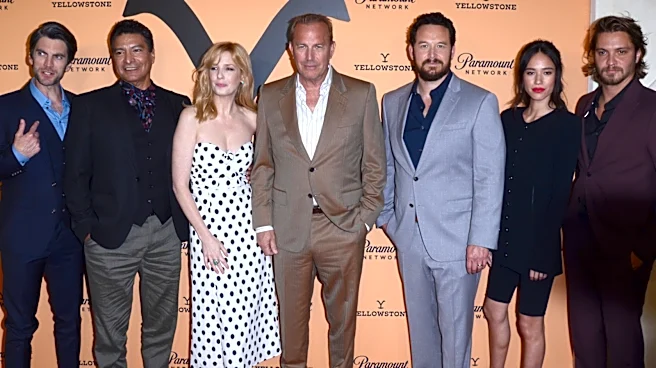
The 'Lioness' series, which premiered in 2023 with its third season launched recently, will continue to showcase the results of Sheridan's demanding directorial style. Actors working on his future projects, including other series like 'Yellowstone' and 'Landman,' can anticipate similar on-set challenges. This approach may become a defining characteristic of Sheridan's productions, potentially attracting actors who thrive under pressure and are eager to push their boundaries. Conversely, it might deter those who prefer a more structured and predictable filming environment. The industry will likely observe how this directorial method continues to influence the performances and overall quality of his shows, potentially setting new benchmarks for on-set actor engagement and adaptability in action-oriented dramas.
Beyond the Headlines
Sheridan's directorial style, characterized by spontaneous and challenging demands, delves into the psychological aspects of performance. By forcing actors to adapt quickly and perform outside their practiced comfort zones, he taps into a raw, unscripted energy that can enhance realism. This method raises questions about the balance between artistic vision and actor well-being, as such intense pressure could be both creatively stimulating and potentially stressful. It also reflects a broader philosophical debate in creative fields about whether discomfort leads to superior art. The 'Lioness' cast's positive reception suggests that, for some, this challenge is a valuable growth opportunity, fostering a belief that they 'can do anything.' This dynamic could influence future training and preparation for actors in demanding roles, emphasizing adaptability and mental fortitude as crucial skills.