


What's Happening?
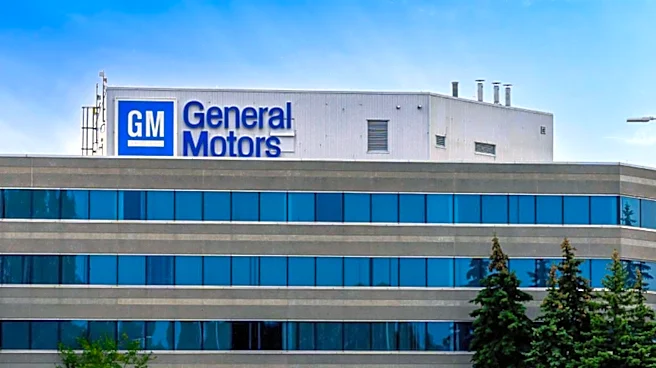
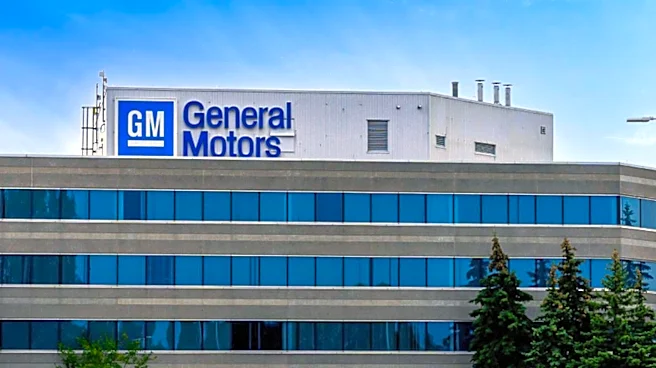
General Motors (GM) CEO Mary Barra acknowledges a strategic gap in the company's product lineup, specifically its limited offerings in hybrid vehicles. While GM's long-term vision remains centered on electric vehicles (EVs), Barra recognizes the immediate
need to expand hybrid options as a 'key bridge' to meet current consumer demand. The company previously abandoned hybrids and smaller vehicles in favor of profit-rich trucks and EVs. Analysts note that GM is late to re-enter the mainstream hybrid market, where Asian rivals like Toyota and Hyundai have established dominance, accounting for over 80% of U.S. hybrid sales. GM's current U.S. hybrid offering is limited to a high-priced Corvette. The company plans to introduce hybrid versions of its Chevrolet Equinox compact crossover by 2028, full-size pickup trucks by 2029, and midsize SUVs by 2030. To support this, GM announced a $750 million investment in its Lansing Delta Township Assembly plant for hybrid production.
Why It's Important?
GM's renewed focus on hybrids is a significant shift that could impact its market share and financial performance in the U.S. auto industry. The current market shows a strong and growing demand for hybrids, with sales increasing by approximately 23% in the first half of the year, driven by high gas prices. By re-entering this segment, GM aims to capture sales it has been missing, especially in compact and midsize car segments where it currently has no offerings. This move could help GM compete more effectively with established hybrid leaders and potentially attract a broader customer base looking for fuel-efficient alternatives. For consumers, this means more hybrid options from a major American automaker, potentially increasing competition and innovation in the segment. However, GM's late entry means it faces an uphill battle against rivals that have long dominated the hybrid market.
What's Next?
GM is expected to roll out its new hybrid models starting with the Chevrolet Equinox compact crossover in 2028, followed by full-size pickup trucks in 2029, and midsize SUVs in 2030. The $750 million investment in the Lansing Delta Township Assembly plant will facilitate this production. While GM's long-term commitment to EVs remains, the success of its hybrid strategy will be crucial in the interim. The company will need to effectively market its new hybrid offerings to differentiate them from established competitors and convince consumers of their value. The performance of these new models, particularly in terms of fuel efficiency, will be closely watched by analysts and consumers alike. The broader automotive market will also observe how this hybrid push impacts GM's overall transition to an all-electric future.
Beyond the Headlines
GM's pivot back to hybrids highlights a broader industry challenge: balancing long-term strategic goals with immediate market realities. While many automakers, including GM, have committed to an all-electric future, the slower-than-anticipated adoption of EVs in the U.S. necessitates a more flexible approach. This situation underscores the complexities of technological transitions in large industries, where consumer preferences, infrastructure development, and economic factors can significantly alter timelines. The decision to invest heavily in hybrids, despite a stated EV-centric strategy, suggests a pragmatic recognition that a diversified powertrain portfolio is essential for sustained profitability and market relevance in the current climate. This could also signal a trend where other automakers might re-evaluate their aggressive EV-only timelines in favor of a more gradual transition incorporating hybrids.