






What's Happening?
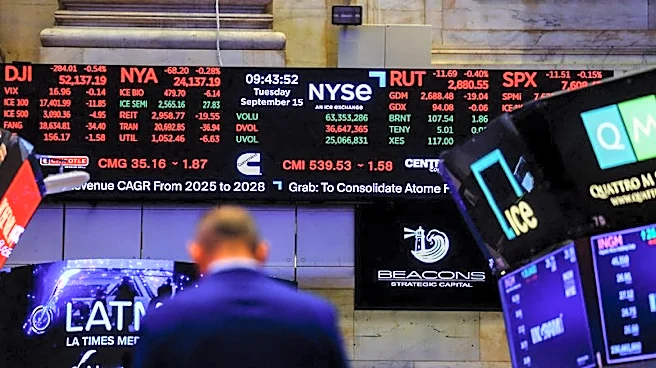
ExxonMobil's stock price increased by 1.2% during trading, closing at $163.35 after reaching a high of $164.37. This surge follows an analyst upgrade and an increased price target of $180 from TD Cowen, which also anticipates strong third-quarter refining
earnings. The company's shares traded approximately 12.97 million hands, a 30% decrease from the average daily volume. WTI crude prices exceeding $90 per barrel are expected to boost ExxonMobil's upstream cash flow, particularly from its Permian Basin operations and expanding production in Guyana. Additionally, ExxonMobil and Chevron are pursuing potential crude, LNG, and LPG supply agreements with Vietnam, and ExxonMobil has selected SLB’s OneSubsea venture for the initial phase of its Rovuma LNG project in Mozambique. These initiatives aim to expand long-term production and marketing opportunities for the company.
Why It's Important?
The rise in ExxonMobil's stock price and positive analyst sentiment underscore the ongoing strength and strategic positioning of major U.S. energy companies in the current market. Increased oil prices directly benefit ExxonMobil's upstream operations, enhancing cash flow and profitability, which is crucial for its investors and the broader energy sector. The pursuit of supply agreements with Vietnam and the advancement of the Rovuma LNG project highlight ExxonMobil's commitment to global expansion and diversification of its energy portfolio. This is significant for U.S. energy security and its role in international energy markets. However, the company faces potential challenges, including a reported $5.2 billion fine in Kazakhstan, which could create a substantial legal and financial overhang. Furthermore, discussions around a diesel export ban and broader energy sector weaknesses could impact refining and fuel-market economics, affecting ExxonMobil's downstream operations despite potential tightening of diesel supplies due to a UK refinery shutdown.
What's Next?
ExxonMobil is expected to continue its focus on growth initiatives, including the development of its Rovuma LNG project and the finalization of supply agreements with Vietnam. The company will likely monitor global oil prices closely, as sustained high prices will continue to support its upstream cash flow. Investors will be watching for the outcome of the reported $5.2 billion fine in Kazakhstan, which could significantly impact the company's financial outlook. Additionally, the broader energy sector's performance and any potential policy changes, such as a diesel export ban, will influence ExxonMobil's operational strategies and market position. The company's efforts in lower-carbon solutions will also be a key area to watch as it navigates evolving environmental regulations and market demands.
Beyond the Headlines
ExxonMobil's strategic moves, such as expanding into new markets like Vietnam and advancing large-scale LNG projects, reflect a broader trend among integrated energy companies to secure long-term energy supplies and diversify their global footprint. The company's emphasis on 'lower-carbon solutions' indicates a recognition of the growing pressure to address climate change, even as it continues to invest heavily in traditional fossil fuel production. This dual approach highlights the complex challenges faced by major energy players in balancing shareholder returns with environmental responsibilities. The potential fine in Kazakhstan also underscores the geopolitical risks inherent in international energy operations, where legal and regulatory landscapes can significantly impact financial performance and corporate reputation. The interplay between global energy demand, geopolitical stability, and environmental policy will continue to shape ExxonMobil's trajectory and the future of the U.S. energy sector.