





What's Happening?
As darker evenings make outdoor activities less appealing, fitness experts are recommending various at-home workout routines to help individuals maintain their fitness schedules. Personal trainer Henry Myers of Peakonic Training suggests that runners
should adapt their regular training by swapping outdoor runs for indoor exercises, emphasizing the importance of preserving existing good habits and routines. Dean Zweck, head of product at Total Fitness, highlights that indoor alternatives like dancing, shadow boxing, and short exercise circuits can effectively maintain cardiovascular fitness. Recommended exercises include squats, lunges, press-ups, star jumps, sit-ups, tricep dips, mountain climbers, and burpees, all of which are simple bodyweight movements. Experts advise structuring sessions with a warm-up, a main session lasting 15-40 minutes, a high-intensity finisher, and a cool-down. Specific session ideas include circuit training, 'every minute on the minute' (EMOM) workouts, and 'as many rounds as possible' (AMRAP) routines, all designed to be adaptable to individual fitness levels and progress.
Why It's Important?
The shift towards at-home workouts is significant for public health, offering accessible solutions for maintaining physical activity regardless of weather conditions or time constraints. This trend supports continuous engagement in fitness, which is crucial for overall well-being and disease prevention. For the fitness industry, it underscores the growing demand for versatile, home-based exercise options, potentially driving innovation in fitness apps, online coaching, and home exercise equipment. Individuals benefit from increased flexibility in their workout schedules, reducing barriers to exercise. The emphasis on proper technique and progressive overload in these routines also promotes safer and more effective training, minimizing injury risks while maximizing fitness gains. This adaptability ensures that fitness remains a consistent part of daily life, even when external factors might otherwise deter participation.
What's Next?
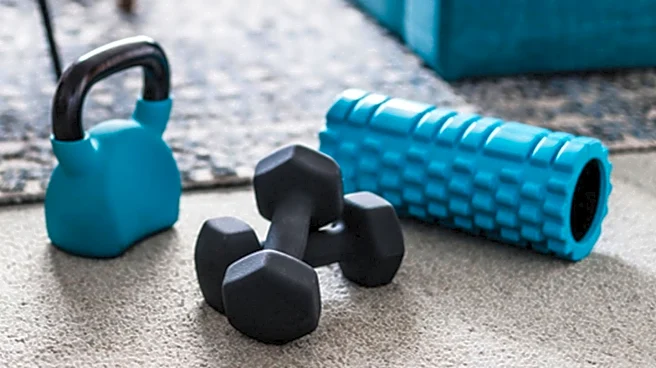
The continued emphasis on at-home workouts suggests a sustained trend in personal fitness, particularly as technology advances to support remote training. We can anticipate further development in fitness applications that offer structured routines, virtual coaching, and community features to replicate the social aspects of group exercise. Fitness professionals may increasingly offer online-tailored programs, adapting to individual needs and goals more specifically than general online workouts. The market for home fitness equipment, from basic bodyweight aids to more advanced smart devices, is also likely to expand. As people become more accustomed to the convenience and effectiveness of home-based exercise, these methods could become a permanent fixture in many individuals' fitness regimens, evolving with new research and technological integrations to offer more personalized and engaging experiences.
Beyond the Headlines
The rise of at-home workouts reflects a broader cultural shift towards greater autonomy and personalization in health and wellness. This trend challenges traditional fitness models centered around gyms and structured classes, empowering individuals to take more direct control over their physical activity. It also highlights the increasing integration of technology into daily life, where digital platforms facilitate access to expert guidance and diverse workout options from the comfort of one's home. Ethically, this shift raises questions about equitable access to digital fitness resources and the potential for a widening gap between those who can afford premium online coaching or smart equipment and those who cannot. Culturally, it may foster a more individualized approach to fitness, potentially altering social dynamics associated with communal exercise spaces and encouraging new forms of virtual fitness communities.