
What's Happening?
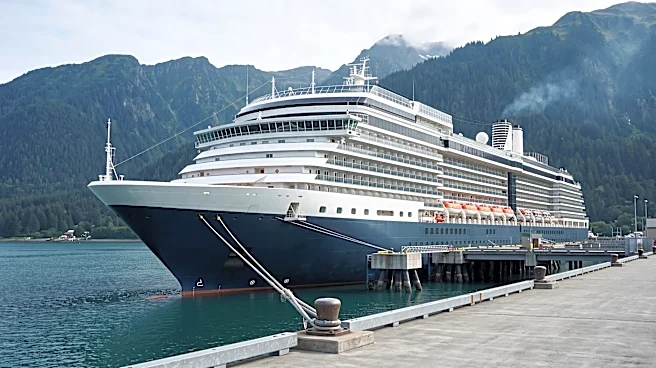
Juneau, Alaska, a pioneer in cruise ship shore power, is encountering significant financial hurdles in its efforts to expand this technology beyond its single existing electrified dock. Twenty-five years
ago, Juneau's Franklin Street Dock became the first to offer shore power, allowing cruise ships to shut down their diesel engines while in port and connect to the city's renewable energy grid. This initiative, led by Princess Cruises, has since become a global best practice, with over 40 other ports adopting similar systems. The success of the Franklin Dock has prevented over 80,000 metric tons of emissions. However, Juneau Port Director Carl Uchytil revealed that preliminary cost estimates for electrifying the city's two publicly owned docks, the Alaska Steamship Dock and the Cruise Ship Terminal Dock, have resulted in 'sticker shock.' While informal discussions previously estimated the cost at around $50 million, the current design work, undertaken by H3 Solutions, suggests a much higher figure. The city's Docks and Harbors Department operates these two public docks, and the design work is currently pausing at 35% completion for review.
Why It's Important?
The high cost of expanding shore power in Juneau highlights a critical challenge for port cities aiming to reduce their environmental footprint and embrace sustainable practices. While shore power offers substantial benefits, including reduced local pollution, lower fuel costs for cruise lines, and alignment with sustainability goals, the initial investment in infrastructure is considerable. Juneau's reliance on renewable energy for its power grid makes shore power particularly attractive, enhancing its appeal as a 'high-quality destination' for environmentally conscious travelers, as noted by Liz Perry, president and CEO of Travel Juneau. The inability to expand this infrastructure due to cost could hinder Juneau's efforts to further leverage its renewable energy advantage and attract more visitors seeking sustainable travel options. This situation also underscores the broader economic implications for the cruise industry, which is increasingly retrofitting ships to be shore power-compatible, indicating a growing demand for such facilities.
What's Next?
The design work for Juneau's expanded shore power project is currently paused at 35% completion for an important review stage. Juneau Port Director Carl Uchytil has indicated that while preliminary cost numbers are substantial, they are not yet public. The city has a memorandum of agreement with Alaska Electric Light and Power to manage the design work, with early stages costing approximately $2 million. The next steps will involve a thorough review of the design and cost estimates, likely leading to efforts to secure multiple funding sources to cover the projected expenses, which are expected to exceed $50 million. The outcome of this review and the city's ability to finance the project will determine the timeline for electrifying the Alaska Steamship Dock and the Cruise Ship Terminal Dock. The decision will also influence Juneau's capacity to accommodate the growing number of shore power-ready cruise ships expected in the coming years.
Beyond the Headlines
The financial challenges faced by Juneau in expanding its shore power infrastructure reveal a deeper tension between environmental aspirations and economic realities in the maritime industry. While shore power is a proven method for reducing emissions and promoting sustainability, the 'sticker shock' associated with its implementation can deter progress, even in communities committed to green initiatives. This situation raises questions about the role of federal and state funding, as well as private-public partnerships, in bridging the financial gap for such large-scale environmental projects. Furthermore, it highlights the need for innovative financing models and potentially standardized, more cost-effective solutions for port electrification. The long-term shift towards shore power-compatible cruise ships, as indicated by the Cruise Lines International Association, suggests that ports that successfully overcome these initial investment hurdles will gain a competitive advantage in attracting a growing segment of the tourism market, while those that cannot may fall behind in both environmental stewardship and economic opportunity.