






What's Happening?
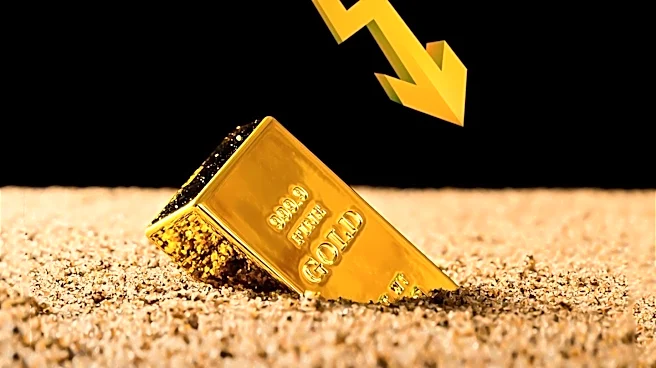
Gold prices have fallen to around $4,000 an ounce, extending a sharp sell-off that has led major banks to revise their previously bullish forecasts. This downturn follows a historic two-year rally where gold prices more than doubled. The sell-off is attributed
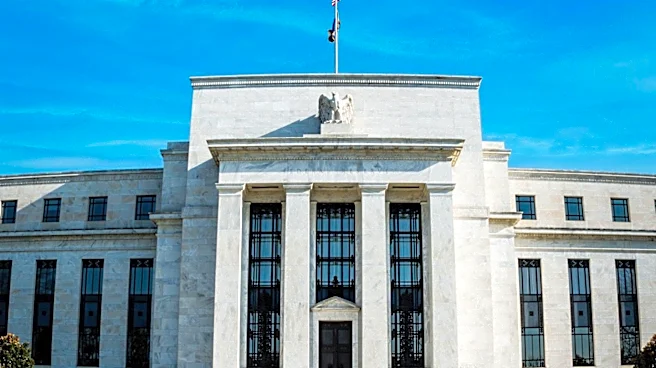
to a stronger US dollar and expectations that the Federal Reserve will maintain or increase interest rates, reducing the appeal of non-yielding assets like gold. ING and Deutsche Bank have both lowered their gold price forecasts for the third and fourth quarters of 2026, citing higher bond yields and softer investor demand as contributing factors.
Why It's Important?
The decline in gold prices and the revision of forecasts by major banks highlight the shifting dynamics in the financial markets. As interest rates rise and the dollar strengthens, gold becomes less attractive as an investment, impacting investors who rely on it as a safe-haven asset. This shift could lead to a reallocation of investments towards yield-bearing assets, affecting the broader commodities market. The changes in gold price forecasts also reflect the market's adaptation to new economic conditions, including geopolitical tensions and central bank policies.
What's Next?
As the Federal Reserve's interest rate policies continue to influence the market, gold prices may remain under pressure. Investors and financial institutions will likely monitor economic indicators and central bank actions closely to adjust their strategies. The potential for further interest rate hikes could lead to continued volatility in the gold market, prompting investors to seek alternative assets. The market will also watch for any geopolitical developments that could impact gold demand and prices.