






What's Happening?
Despite reporting strong earnings, major U.S. and European banks are facing growing investor concerns regarding their outlook for 2027. Financial institutions such as JPMorgan Chase & Co., Bank of America Corp., Citigroup Inc., and Morgan Stanley have
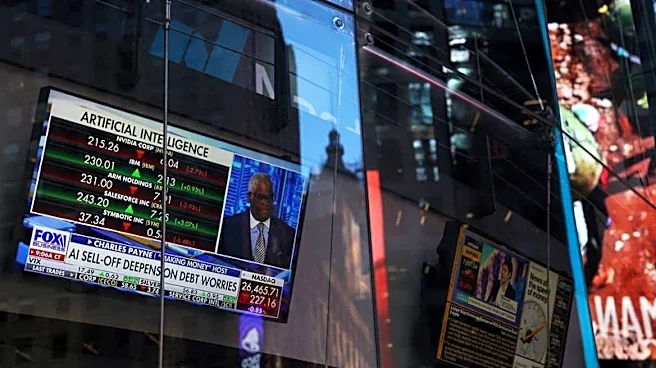
cited macroeconomic volatility and political uncertainty as key challenges. While most banks have seen increased profits compared to the previous year, doubts are emerging about the returns from significant investments in data center financing, particularly in the context of artificial intelligence. A year ago, investors were more optimistic about the banking sector, anticipating a Federal Reserve interest rate cut in December 2025. However, data center spending, once viewed as a growth opportunity, is now increasingly seen as a potential risk if AI investments do not yield expected returns. On the positive side, yields on 10-year U.S. Treasury notes have fallen, and the Fed held interest rates steady in October, allowing banks to benefit from robust economic activity, active dealmaking, and strong wealth management businesses.
Why It's Important?
The cautious outlook from major banks, despite strong current earnings, signals potential headwinds for the U.S. financial sector and broader economy in 2027. Investor apprehension about macroeconomic volatility and political uncertainty can lead to reduced confidence, impacting stock valuations and investment flows. The re-evaluation of data center financing, especially related to AI, highlights a critical risk for banks that have heavily invested in this area; if AI investments fail to deliver, these could become significant liabilities. This shift in perception could influence future lending practices and investment strategies within the tech sector. Furthermore, any potential cracks in credit quality, particularly concerning private credit and AI data-center financing, could affect the stability of U.S. banks, potentially leading to tighter credit conditions for businesses and consumers. The banking sector's health is a key indicator of overall economic stability, making this cautious outlook a significant concern.
What's Next?
Banks are expected to face a more challenging environment in 2027 as revenue growth normalizes and risks associated with certain types of debt, such as data center financing and private credit, potentially rise. Investors will closely monitor banks' exposure to these areas and their ability to manage potential credit quality issues. Financial institutions like UBS and JPMorgan Chase are forecasting more typical seasonal moderation in transaction volumes, though some expect continued revenue growth assuming constructive markets. The Federal Reserve's future interest rate decisions will also play a crucial role, as further hikes could exacerbate concerns about credit quality and economic slowdown. Stakeholders will be watching for how banks adapt their strategies to mitigate these emerging risks, potentially through more conservative lending practices or by re-evaluating their investment portfolios.
Beyond the Headlines
The evolving sentiment around bank investments in AI data centers points to a deeper trend: the increasing integration of technological advancements with traditional financial risk. The initial optimism surrounding AI as a growth driver is now tempered by the realization of significant capital expenditure and the uncertainty of returns, creating a new layer of systemic risk for the banking sector. This situation also highlights the broader economic implications of rapid technological shifts, where large-scale investments in emerging technologies can create both immense opportunities and unforeseen vulnerabilities. The cautious outlook could prompt a re-evaluation of how financial institutions assess and manage risks associated with technological innovation, potentially leading to new regulatory considerations or industry best practices for financing high-tech infrastructure. This dynamic interplay between finance and technology will likely shape the future landscape of both sectors.