



What's Happening?
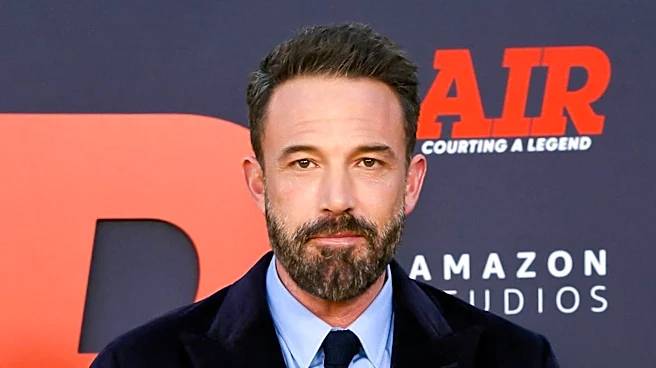
Ben Affleck, as he prepares for the release of his upcoming crime thriller 'Animals' on Netflix and in select theaters on October 9, 2026, has revealed the significant influence of directors Gus Van Sant and Warren Beatty on his filmmaking approach. Affleck, who
co-wrote and starred in the Oscar-winning film 'Good Will Hunting' directed by Van Sant, shared a key lesson from Van Sant: 'You have to listen to the movie, 'cause it will talk back to you.' This advice emphasized a fluid and responsive directing process. Additionally, Affleck sought guidance from Warren Beatty, an actor who also directed, before embarking on his own directing career. Beatty's advice to Affleck was to 'Take a good idea from anybody, from anybody,' highlighting the collaborative nature of filmmaking and the importance of being open to contributions from the entire crew. Affleck noted that while he has learned from every director he has worked with, Van Sant and Beatty's insights were particularly formative.
Why It's Important?
This insight into Ben Affleck's directorial philosophy is important for understanding the creative process behind his upcoming film 'Animals' and his future projects. The influence of Gus Van Sant, known for his distinctive and often independent filmmaking style, suggests that Affleck may prioritize an organic and adaptive approach to storytelling. Van Sant's emphasis on 'listening to the movie' implies a less rigid, more intuitive directing method, which could lead to films that feel more authentic and less constrained by preconceived notions. Similarly, Warren Beatty's advice on embracing ideas from anyone on set underscores the value of collaboration and a non-hierarchical creative environment. This approach can foster a more engaged and innovative production team, potentially leading to richer and more nuanced cinematic outcomes. For audiences, understanding these influences provides context for Affleck's artistic choices and could shape expectations for the tone and style of his directorial work, particularly in a genre like crime thrillers where character depth and narrative complexity are crucial.
What's Next?
With 'Animals' scheduled for release on Netflix and in select theaters on October 9, 2026, the film will serve as the first major test of how Ben Affleck has integrated the lessons learned from Gus Van Sant and Warren Beatty into his directing. The reception of 'Animals' by critics and audiences will likely provide initial feedback on the effectiveness of his collaborative and intuitive filmmaking style. Following this release, industry observers will be keen to see if Affleck continues to apply these principles in his subsequent directorial endeavors. His future projects will be scrutinized for evidence of the 'fluid process' and openness to diverse ideas that he champions. The success or challenges faced by 'Animals' could influence the types of projects Affleck chooses to direct next, as well as how he approaches the development and production phases. Furthermore, his public discussions about his mentors may inspire other actor-directors to seek similar guidance, potentially fostering a new generation of filmmakers who prioritize collaborative and adaptive creative processes.
Beyond the Headlines
Beyond the immediate release of 'Animals,' Ben Affleck's articulation of his directorial influences highlights a broader discussion within the film industry about the nature of creative leadership. Van Sant's philosophy of 'listening to the movie' challenges the traditional auteur theory, which often places the director as the sole visionary. Instead, it suggests a more organic, almost symbiotic relationship between the filmmaker and the evolving narrative. This perspective can lead to films that are more responsive to the material itself, potentially resulting in more authentic and resonant storytelling. Beatty's emphasis on taking good ideas from anyone on set further democratizes the creative process, acknowledging that valuable insights can come from any member of the production team. This approach not only fosters a more inclusive set environment but can also lead to a richer tapestry of ideas contributing to the final product. In an industry often characterized by hierarchical structures, Affleck's embrace of these collaborative and adaptive philosophies could signal a shift towards more dynamic and collectively informed filmmaking practices, potentially influencing how future generations of directors are trained and how films are made.