








What's Happening?
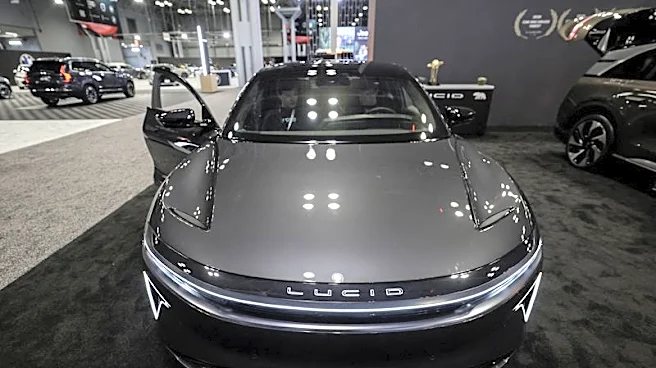
Lucid Group, a California-based electric vehicle manufacturer, experienced significant stock volatility following a report from an EV blog suggesting potential bankruptcy. This led to a 57% intraday stock plunge, although Lucid denied any plans for a Chapter
11 filing. The company has since recovered its stock value, but the incident underscores investor concerns about Lucid's financial health, including cash burn, management changes, and job reductions. Lucid delivered fewer than 4,000 vehicles in the second quarter and is not expected to achieve positive free cash flow before 2030. The company's future is closely tied to Saudi Arabia's Public Investment Fund, which owns a majority stake and has provided loans. Lucid's market value has dropped from over $91 billion in 2021 to approximately $2.3 billion.
Why It's Important?
The challenges faced by Lucid highlight broader issues within the U.S. electric vehicle startup ecosystem. The high costs and difficulties in scaling production have led to bankruptcies for companies like Lordstown Motors and Fisker. Lucid's situation reflects the volatility and financial instability that can affect new automakers. The reliance on external funding, particularly from international investors like Saudi Arabia's Public Investment Fund, underscores the challenges U.S. startups face in securing domestic support. This situation also points to the competitive pressure from international markets, particularly China, which has a more extensive range of electric vehicle models and emerging competitors.
What's Next?
Lucid may need additional external financing to sustain operations, given its current financial outlook. The company's reliance on Saudi Arabia's Public Investment Fund suggests that future support may depend on maintaining favorable relations with this key investor. The broader U.S. electric vehicle market may see fewer startups and limited efforts from established manufacturers unless there is more consistent federal policy support. The competitive landscape is likely to be influenced by advancements in battery technology and vehicle design emerging from international markets, particularly China.
Beyond the Headlines
The volatility in Lucid's stock and the broader challenges in the electric vehicle industry raise questions about the sustainability of current business models for startups. The reliance on international funding highlights potential vulnerabilities in the U.S. market, where domestic investment may be insufficient. Additionally, the shift in focus by major automakers like Ford and General Motors towards traditional vehicles and hybrids suggests a reevaluation of electrification strategies. This could impact the pace of innovation and adoption of electric vehicles in the U.S., potentially affecting environmental goals and energy policies.