



What's Happening?
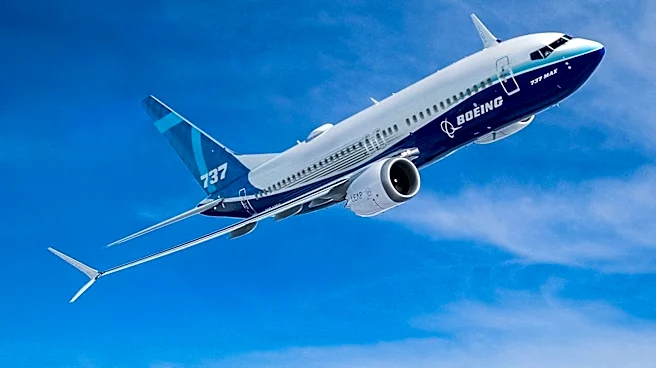
Boeing CEO Kelly Ortberg indicates that elevated jet fuel prices, typically a challenge for airlines, could paradoxically boost orders for new, more fuel-efficient aircraft. Speaking on Boeing's third-quarter earnings call, Ortberg noted that a significant
portion of the company's substantial $745 billion backlog, which includes over 6,300 commercial airplanes, is for replacement aircraft. These newer models offer improved fuel efficiency compared to older planes. While high fuel costs might make airlines hesitant to expand their capacity, the economic pressure to reduce operating costs by upgrading to more efficient jets could prompt some customers to seek earlier deliveries. Ortberg stated that Boeing has not yet observed customers altering their growth plans due to fuel prices, and the company's extensive backlog provides flexibility to manage potential shifts in demand, such as prioritizing replacement aircraft orders.
Why It's Important?
This perspective from Boeing's leadership highlights a critical dynamic within the aviation industry, where operational costs, particularly fuel, significantly influence purchasing decisions. For U.S. airlines, the ability to acquire and deploy more fuel-efficient aircraft directly impacts their profitability and competitiveness, especially during periods of volatile energy prices. Boeing, as a major U.S. manufacturer, stands to benefit if airlines accelerate their fleet modernization efforts. This trend could lead to sustained demand for Boeing's newer models, even if overall airline expansion slows. The emphasis on fuel efficiency also aligns with broader environmental goals, potentially offering a pathway for airlines to reduce their carbon footprint while improving their bottom line. Conversely, if airlines cannot pass on higher fuel costs to passengers or if economic conditions deter travel, the overall growth of the aviation sector could still be jeopardized, impacting Boeing's long-term order book.
What's Next?
Boeing will continue to monitor the impact of fuel prices on airline purchasing decisions and delivery schedules in the coming quarters. The company's strategy involves leveraging its substantial backlog to manage any potential shifts in demand, prioritizing customers who are looking to replace older, less efficient aircraft. Airlines, in turn, will likely continue to evaluate their fleet strategies, balancing expansion plans with the need for cost-effective operations. The aviation industry will be closely watching global oil prices and their effect on passenger demand and ticket pricing. Any sustained increase in fuel costs could further solidify the business case for investing in new, fuel-efficient aircraft, potentially leading to an acceleration of existing orders or new commitments for advanced models from manufacturers like Boeing.
Beyond the Headlines
The interplay between fuel costs and aircraft demand extends beyond immediate financial implications, touching upon long-term strategic shifts in the aviation industry. The drive for fuel efficiency is not merely an economic imperative but also a response to increasing environmental regulations and public pressure for sustainable aviation. This situation could accelerate the development and adoption of next-generation aircraft technologies, pushing manufacturers to innovate further in areas like aerodynamics, engine design, and alternative fuels. For U.S. aerospace manufacturing, this could mean a sustained focus on research and development, fostering technological leadership and creating high-skilled jobs. Furthermore, the emphasis on fleet modernization could lead to a more resilient and environmentally conscious airline industry in the U.S., better equipped to handle future economic and environmental challenges.