





What's Happening?
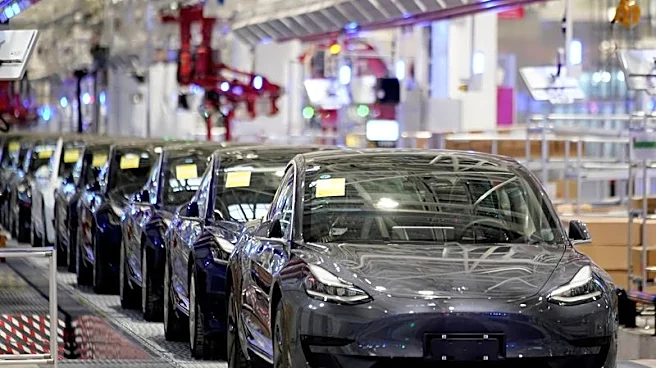
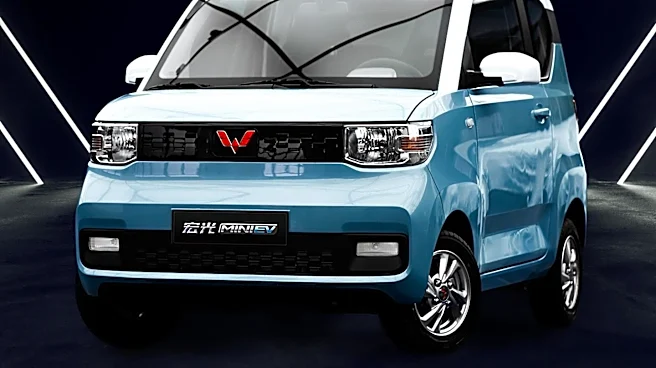
Chinese-branded automobiles are increasingly likely to enter the U.S. market within the next five to ten years, a development anticipated by industry figures like Ford CEO Jim Farley. This comes despite historical opposition to imports, including during
the Trump administration. While Chinese-built cars such as some Volvo, Polestar, Lincoln models, and Waymo's imported Zeekr robotaxis are already present in the U.S., direct Chinese brands have not yet established a significant presence. Previous attempts by brands like BYD and Great Wall to enter the U.S. market over two decades ago did not materialize, possibly due to market conditions, product quality, or consumer sentiment regarding 'Made In China' labels. However, Chinese automakers have significantly expanded their global reach, particularly in the Global South and more recently in Europe, where their market share grew from 0.5% in 2021 to 10.9% by June. These newer Chinese vehicles are described as competent and competitive, moving beyond the perception of 'cheap junk cars.'
Why It's Important?
The potential entry of Chinese automakers into the U.S. market signifies a major shift in the global automotive landscape, impacting established American, Japanese, and Korean manufacturers. Historically, the U.S. market has seen significant disruption from Japanese brands in the 1970s and 1990s, and Korean brands in the 1990s, which forced existing players to innovate and compete. The arrival of Chinese brands could introduce new competition, potentially leading to more diverse vehicle options and competitive pricing for American consumers. This development could challenge the market dominance of current players and necessitate strategic adjustments in product development, pricing, and marketing. For U.S. consumers, it could mean access to more affordable or innovative vehicles, while for domestic automakers, it presents a new competitive threat that could impact sales and market share. The automotive industry, already grappling with internationalization, will face further complexities as Chinese companies, which have not historically focused their export efforts on the U.S., now look to penetrate the world's second-largest automotive market.
What's Next?
The coming years are expected to see increased efforts by Chinese automotive brands like BYD, Xpeng, and Xiaomi to establish a foothold in the U.S. market. This will likely involve navigating regulatory hurdles, building distribution networks, and addressing potential consumer skepticism. The success of these brands will depend on their ability to offer competitive products in terms of quality, technology, and price, as well as their capacity to build trust with American buyers. Established automakers in the U.S. will likely respond by intensifying their own product development, focusing on innovation, and potentially adjusting pricing strategies to retain market share. The U.S. government's stance on imports, particularly from China, could also play a significant role, with potential policy decisions influencing the pace and scale of market entry. The automotive industry is bracing for a significant shake-up, with the next five to ten years being crucial in determining the extent of Chinese automakers' impact on the American market.
Beyond the Headlines
The potential influx of Chinese automobiles into the U.S. market extends beyond mere economic competition, touching upon broader geopolitical and cultural dimensions. The 'Made In China' label has historically carried certain perceptions among American consumers, and the success of Chinese automakers will depend on their ability to overcome these, much like Japanese and Korean brands did in previous decades. This shift could also reignite discussions about trade policies and economic nationalism, especially given past opposition to imports. Furthermore, the entry of these brands could accelerate technological advancements in the U.S. automotive sector, particularly in areas where Chinese companies have made significant strides, such as electric vehicles and autonomous driving. The long-term implications could include a more integrated global automotive supply chain, increased pressure on labor practices and environmental standards across the industry, and a re-evaluation of what constitutes a 'global car' in the American consumer's mind.