






What's Happening?
Citigroup, a major U.S. bank, is in discussions with U.S. State and Treasury departments regarding a potential return to Venezuela after a five-year absence. The bank is seeking clarity on necessary sanctions waivers to re-establish financial services
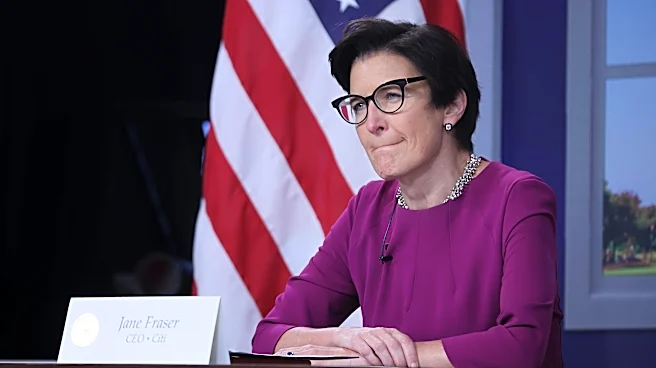
in the country and reconnect the Venezuelan market to the U.S. financial system. This move would initially involve correspondent banking partnerships with established Venezuelan financial institutions rather than reopening physical branches. Other banks are also reportedly exploring similar returns. Citigroup's previous operations in Venezuela, which began in 1917, ceased in 2021. In 2015, the bank engaged in a four-year swap deal with Venezuela, lending $1.1 billion collateralized by gold. When Venezuela's central bank failed to repurchase the gold, Citi sold it, depositing approximately $260 million into a U.S. account. Jane Fraser, current CEO of Citigroup, led the bank's Latin American business during that period and has publicly called for a change in Venezuela's leadership.
Why It's Important?
Citigroup's potential return to Venezuela signifies a significant step towards reopening the Venezuelan economy to foreign companies and could facilitate the reconnection of its financial system to international markets. This development is particularly relevant for U.S. oil companies like Chevron and ExxonMobil, which maintain business ties with Citigroup and could benefit from financial normalization in Venezuela. The bank is already involved in managing Venezuelan oil proceeds held in a U.S. Treasury account. The re-entry of a major U.S. bank could also influence Venezuela's efforts to restructure its public debt, which reached $237.5 billion in 2025. For Citigroup, this move could expand its client base and regional presence, following its recent office opening in Guyana, a country with significant oil discoveries. The discussions highlight the complex interplay between U.S. foreign policy, economic sanctions, and the interests of major financial institutions.
What's Next?
The immediate next steps involve continued negotiations between Citigroup and U.S. State and Treasury departments to secure the necessary sanctions waivers. Should these discussions prove fruitful, Citigroup will likely proceed with establishing correspondent banking partnerships with Venezuelan financial institutions. This model would allow the bank to process international payments and transfers for local banks, acting as a financial bridge without requiring a physical presence. Other banks that have approached U.S. officials, such as Erebor Bank, may also advance their plans for correspondent banking services in Venezuela. The Venezuelan government, currently preparing to restructure its substantial public debt, will likely monitor these developments closely, as the return of major financial players could impact its economic recovery efforts and access to international capital.
Beyond the Headlines
The potential return of Citigroup to Venezuela extends beyond mere financial transactions, touching upon broader geopolitical and economic implications. It suggests a possible shift in U.S. policy towards Venezuela, indicating a willingness to re-engage economically despite ongoing political tensions. This move could be interpreted as an attempt to stabilize the Venezuelan economy and potentially influence its political landscape through economic leverage. The historical context of Citigroup's 2015 gold swap deal and CEO Jane Fraser's past comments on Venezuelan leadership underscore the complex relationship between international finance and sovereign governance. Furthermore, the strategy of using correspondent banking without physical branches reflects a cautious approach by U.S. banks to operate in high-risk environments, balancing potential profits with regulatory compliance and political sensitivities. This could set a precedent for how other U.S. financial institutions engage with sanctioned nations in the future.