





What's Happening?
The Body Insights app has released several updates focused on integrating sleep and fitness data to provide users with more comprehensive health insights. Recent versions, including v475, v473, v472, v471, v469, v468, v467, v466, v465, v464, v463, and v462,
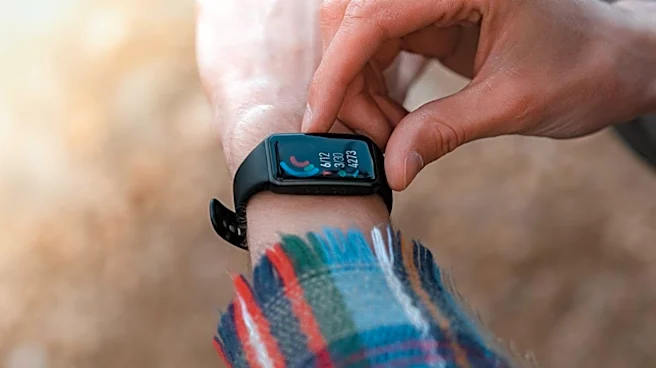
introduce features such as 'Overnight recharge' which utilizes sleep and recovery data, and the alignment of sleep and fitness cards by day. The app now offers 'Fitness Age,' 'Nervous System Age,' and 'Sleep Age' to help users understand their health metrics. A 'Morning Report' feature combines sleep, readiness, stress, and daily plans. The updates also include smarter stress alerts based on fresh HRV readings, improved recovery guidance, and clearer explanations of health data. The app aims to turn Apple Watch data into actionable advice, with a focus on circadian timing, training load, and overall recovery signals.
Why It's Important?
These updates are significant for individuals seeking to optimize their health and fitness through data-driven insights. By aligning sleep and fitness data, the Body Insights app provides a more holistic view of an individual's well-being, moving beyond isolated metrics. The introduction of 'Fitness Age' and 'Sleep Age' can motivate users by offering easily understandable benchmarks for their health. The enhanced recovery guidance and smarter stress alerts can help prevent overtraining and improve overall physical and mental resilience. For the health and wellness technology sector, this represents a continued trend towards integrated and personalized health solutions, potentially influencing how other apps develop their features to offer more comprehensive and actionable user data. This could lead to better health outcomes for users and a more competitive market for health tracking applications.
What's Next?
The continuous updates from Body Insights suggest a commitment to refining and expanding its health monitoring capabilities. Future developments may include further integration with other health data sources, more personalized coaching features based on the aggregated data, and potentially partnerships with healthcare providers for a more clinical application of the insights. Users can expect ongoing improvements in the accuracy and actionability of the app's recommendations. The focus on circadian rhythms and recovery signals indicates a move towards more sophisticated physiological modeling, which could lead to even more precise guidance for optimizing daily routines and training schedules. The app's evolution will likely continue to emphasize user-friendly interfaces and clear explanations of complex health data.
Beyond the Headlines
The trend of integrating sleep and fitness data, as exemplified by the Body Insights app, highlights a broader shift in how individuals approach personal health. It underscores the growing recognition that sleep is not merely a passive state but an active component of overall physical and mental performance. This integration also raises questions about data privacy and the ethical use of highly personal health information. As these apps become more sophisticated, the line between self-monitoring and medical advice may blur, necessitating clear guidelines and user education. Furthermore, the emphasis on 'ages' (Fitness Age, Sleep Age) could influence societal perceptions of health and aging, potentially fostering a more proactive approach to maintaining well-being throughout life. This technological advancement could also contribute to a more preventative healthcare model, empowering individuals with tools to manage their health proactively.