




What's Happening?
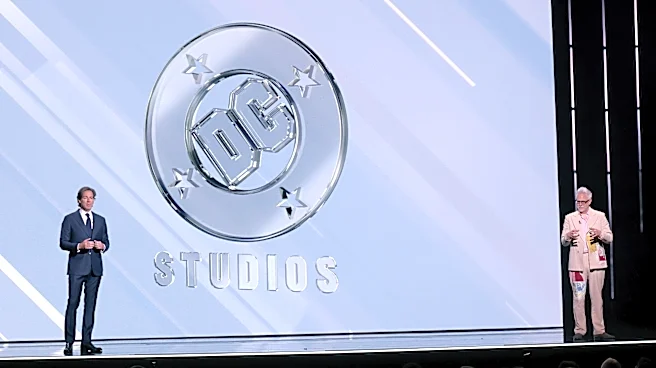
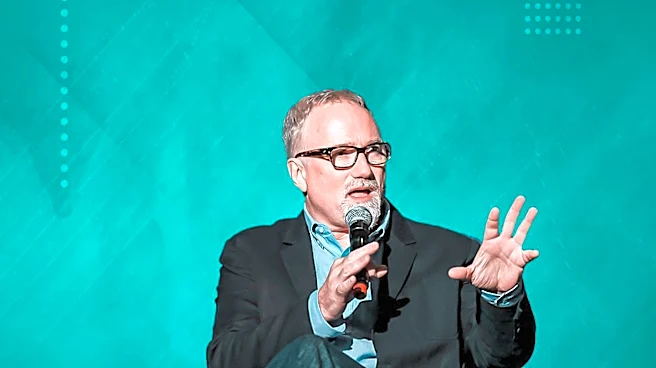
Filmmaker David Fincher has publicly expressed his reluctance to engage with large corporate franchises, labeling DC Studios as 'dysfunctional' and revealing he turned down the opportunity to showrun Amazon's 'Lord of the Rings' series, 'Rings of Power.'
During an interview on Josh Horowitz’s 'Happy Sad Confused' podcast, Fincher stated that he views such projects as 'an extension of a corporate interest,' which he aims to avoid. He specifically commented on James Gunn's role at DC Studios, suggesting that taking on such a position requires 'bigger balls' than he possesses, citing the studio's 'innate DNA' as dysfunctional. Fincher also noted a growing constriction in the film business, particularly with major studios like Paramount and Warner Bros., making it increasingly difficult to protect individual artistic voices in cinema. Additionally, he mentioned a past conversation with Kathleen Kennedy about potentially taking Lucasfilm public before its acquisition by Disney, indicating his interest in alternative business models for major film entities.
Why It's Important?
Fincher's comments highlight a significant tension within the U.S. film industry between artistic integrity and corporate interests. His critique of DC Studios as 'dysfunctional' could influence public perception and potentially impact future talent recruitment for major franchise projects, as filmmakers may become more wary of engaging with studios perceived as creatively restrictive or poorly managed. His decision to reject a high-profile project like 'Rings of Power' underscores a broader sentiment among some established directors who prioritize creative control over the financial and visibility benefits of large-scale franchises. This stance could encourage other filmmakers to pursue independent or smaller-scale projects, potentially shifting investment and audience attention towards more original content. The discussion about protecting individual voices in cinema also resonates with ongoing debates about the impact of streaming services and studio consolidation on artistic freedom and diversity in storytelling.
What's Next?
Fincher's continued focus on projects like 'The Further Mis-Adventures of Cliff Booth,' which is opening in IMAX and streaming on Netflix, suggests he will likely continue to pursue films that offer him greater creative autonomy. His public statements may prompt further discussion within the industry regarding the balance between corporate mandates and artistic vision, potentially leading to more filmmakers voicing similar concerns. While unlikely to immediately alter the operational strategies of major studios like DC, his remarks could contribute to a growing dialogue about the sustainability of current franchise-driven models and the need for more filmmaker-friendly environments. Future projects from Fincher will likely be scrutinized for how they embody his stated commitment to protecting the 'individual voice in cinema,' potentially setting a precedent for other directors navigating similar career choices.
Beyond the Headlines
Fincher's observations delve into the deeper structural challenges facing the U.S. film industry, particularly the increasing difficulty for individual artistic voices to thrive amidst corporate consolidation and franchise dominance. His reference to the 'horrible constricting of the business' points to a potential long-term shift where unique cinematic visions might be marginalized in favor of commercially safer, pre-established intellectual properties. This raises ethical questions about the future of diverse storytelling and the role of cinema as an art form versus a pure commercial product. The tension he describes could lead to a bifurcation of the industry, with a mainstream dominated by corporate franchises and a more niche, independent sector dedicated to auteur-driven works. This could also impact film education and the aspirations of emerging filmmakers, who might feel pressured to conform to commercial demands rather than developing distinct artistic styles.