



What's Happening?
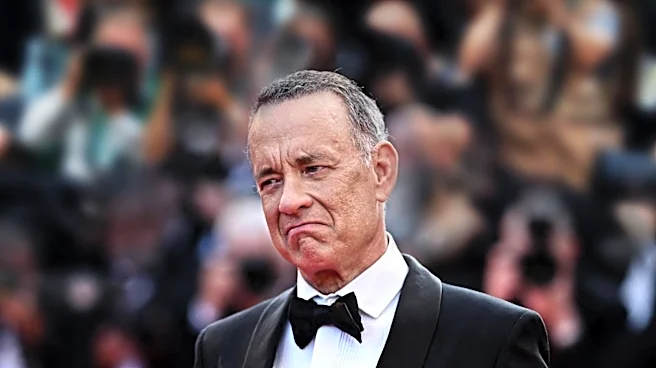
Henry Winkler has publicly addressed the long-standing tension between himself and Tom Hanks, stemming from Winkler's firing as director of the 1989 film 'Turner & Hooch'. Winkler, known for his role as 'the Fonz' on 'Happy Days', stated in an interview
on 'In Depth With Graham Bensinger' that he felt he was doing his job by giving direction, which he believes 'pissed them off.' He was fired after 13 days of filming by studio executive Jeffrey Katzenberg. Winkler also revealed that a 'Happy Days' retrospective sought to include 60 seconds of Hanks' guest appearance from 1982 but was denied permission. Despite previously denying a feud in 2020, Winkler now acknowledges he is 'still working on' his perspective regarding their dynamic and believes the relationship could 'repair itself.'
Why It's Important?
This ongoing narrative between two prominent Hollywood figures highlights the complexities of professional relationships within the entertainment industry, particularly when creative differences or power dynamics lead to conflict. The public's continued interest in this decades-old tension underscores the enduring impact of celebrity interactions and how they can shape perceptions of individuals and their careers. For aspiring filmmakers and actors, this situation serves as a cautionary tale about the potential for clashes on set and the long-term repercussions. The denial of permission for Hanks' footage in the 'Happy Days' retrospective also illustrates the control celebrities and their representatives maintain over their public image and past work, even years after the fact. This control can influence how historical media content is presented and consumed, affecting both nostalgic value and educational opportunities.
What's Next?
It remains to be seen if the relationship between Henry Winkler and Tom Hanks will indeed 'repair itself' as Winkler hopes. The ball may now be in Hanks' court, as his representative did not immediately respond to requests for comment. Public statements from either party, or a lack thereof, will likely dictate the future narrative of this long-standing Hollywood dynamic. Any future projects or public appearances involving both actors would be closely scrutinized for signs of reconciliation or continued distance. The incident also raises questions about the broader implications for archival content and celebrity rights, potentially influencing how studios and producers approach the use of past work involving individuals with known personal or professional conflicts.
Beyond the Headlines
The tension between Winkler and Hanks, particularly the 'Turner & Hooch' incident, delves into deeper themes of creative control, professional respect, and the often-unseen pressures within film production. Winkler's admission of feeling 'insecure' and 'talking too much' during his directorial stint offers a glimpse into the vulnerability even established actors can experience when stepping into new roles. The story also touches on the subjective nature of 'doing one's job' in a collaborative art form, where one person's direction can be another's interference. The inability to secure permission for Hanks' 'Happy Days' footage for a retrospective speaks to the lasting impact of personal grievances on professional legacies and the careful curation of public image in Hollywood. This situation underscores how personal dynamics, even decades later, can influence access to and presentation of cultural history.