









What's Happening?
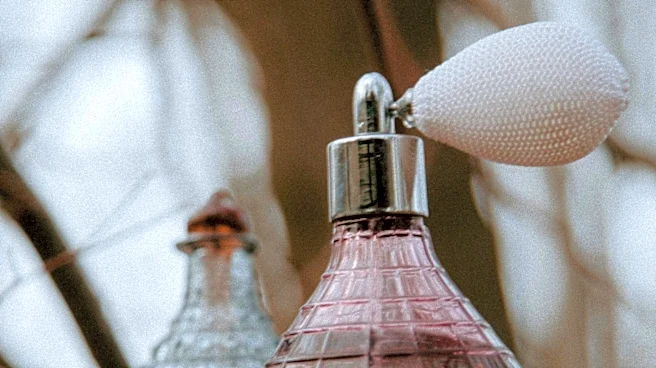
A unique collection of oversized perfume bottles, known as factices, has been amassed by a collector named Gupta, who began his journey in the early 1990s. Factice bottles, often crafted by luxury glassmakers like Baccarat and Lalique, were originally
designed as exact replicas of regular-sized perfume bottles, filled with colored water or alcohol to mimic the appearance of actual perfume. These bottles became larger and more elaborate through the 1970s to the 1990s but saw a decline in production by the early 2000s due to high production costs and changing retail cultures. Gupta's fascination with these bottles began when he discovered a dusty factice in the basement of a perfume wholesaler in New York City, where he worked after immigrating from India. Despite the initial reluctance of his boss, Gupta eventually purchased the bottle for $2,000, marking the beginning of his extensive collection.
Why It's Important?
Gupta's collection of factices not only represents a personal passion but also serves as a historical archive of the perfume industry's evolution. These oversized bottles are a testament to the artistry and craftsmanship of luxury glassmakers and reflect the changing trends in consumer culture and retail practices over the decades. The collection highlights the intersection of art, commerce, and personal obsession, offering insights into how luxury items can transcend their commercial purpose to become objects of cultural and historical significance. For the fragrance industry, such collections preserve the legacy of past marketing strategies and design aesthetics, providing inspiration for future innovations.
What's Next?
While the article does not specify future plans for Gupta's collection, it is likely that such a unique assembly of factices could attract interest from museums or exhibitions focused on the history of fashion and luxury goods. Additionally, the collection could inspire contemporary designers and marketers in the fragrance industry to revisit and reinterpret past trends. Gupta's story may also encourage other collectors to share their own unique collections, potentially leading to a broader appreciation and understanding of niche aspects of consumer history.
Beyond the Headlines
The story of Gupta's collection underscores the broader cultural and economic shifts that have influenced the luxury goods market over the past few decades. The decline in factice production reflects changes in consumer behavior and the increasing emphasis on digital and experiential marketing over traditional retail displays. Furthermore, Gupta's journey from an immigrant worker to a passionate collector highlights themes of personal fulfillment and the pursuit of beauty and art beyond commercial value. This narrative may resonate with individuals who find meaning and identity through collecting and preserving pieces of history.