






What's Happening?
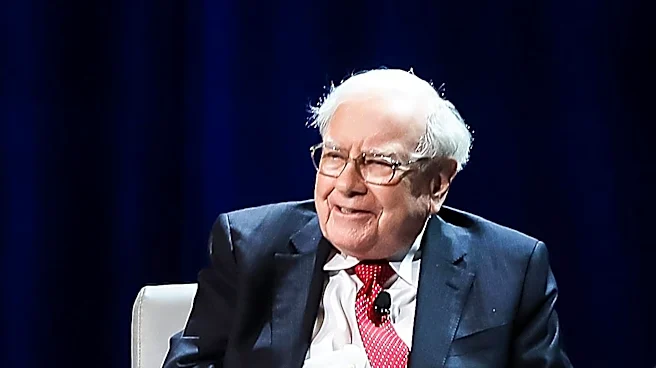
Warren Buffett's investment philosophy, as detailed by The Motley Fool, centers on three core principles: identifying quality companies, purchasing their stocks at attractive valuations, and holding these investments for the long term. While the first
two steps require diligent research and patience, Buffett highlights that the most challenging aspect is often the third—doing nothing, especially during volatile market periods. This strategy is designed to capitalize on the long-term growth trajectory of businesses. The article notes that even the S&P 500 index, despite experiencing numerous downturns like the dot-com crash, the Great Recession, and the coronavirus pandemic, has consistently recovered and reached new highs over time. Buffett himself has suggested that for investors seeking simplicity, investing in an S&P 500 index fund and holding it long-term can guarantee market returns, underscoring the power of sustained investment over market timing. The difficulty of this 'do nothing' approach is particularly evident during bear markets, where the natural inclination might be to sell due to fear.
Why It's Important?
This investment strategy holds significant importance for U.S. investors and the broader financial market by advocating for a disciplined, long-term approach that counters short-term speculative trading. By emphasizing holding through market downturns, Buffett's philosophy encourages stability and reduces the volatility often associated with panic selling. This can lead to more resilient individual portfolios and potentially a more stable market environment overall, as widespread panic selling can exacerbate economic contractions. Investors who adopt this strategy stand to gain from the compounding growth of quality companies and the historical upward trend of the broader market, as demonstrated by the S&P 500. Conversely, those who succumb to the 'fear of missing out' (FOMO) during bull markets or panic during bear markets risk eroding their wealth by making impulsive decisions that deviate from a long-term plan. The strategy also implicitly supports U.S. businesses by encouraging investment in their sustained growth rather than their short-term stock price fluctuations.
What's Next?
For investors, the immediate next step is to internalize and prepare for the psychological challenges of adhering to a long-term holding strategy, particularly in anticipation of future market downturns. As the article suggests, another bear market is inevitable, and mental preparation to resist the urge to sell is crucial. This involves building a portfolio of fundamentally sound companies or investing in broad market index funds like the S&P 500, as Buffett recommends. Financial advisors may increasingly emphasize this patient approach, especially for retirement planning and long-term wealth accumulation. Businesses, in turn, might find more stable investor bases if a greater number of individuals adopt this long-term perspective, potentially allowing them to focus more on sustainable growth rather than quarterly earnings pressures. The ongoing discourse around investment strategies will likely continue to highlight the merits of Buffett's approach as a counterpoint to more speculative or short-term trading tactics.
Beyond the Headlines
Beyond the immediate financial implications, Buffett's strategy touches upon deeper behavioral economics and the psychology of investing. The 'difficulty of doing nothing' highlights the inherent human biases that often lead to suboptimal financial decisions, such as loss aversion and herd mentality. Adopting this strategy requires significant emotional discipline, challenging the prevalent culture of constant activity and immediate gratification often promoted by financial media. Ethically, it promotes a more responsible form of capitalism, where investment is tied to the fundamental value and long-term prospects of businesses rather than speculative bubbles. Culturally, it encourages a shift from viewing the stock market as a casino to seeing it as a mechanism for participating in the growth of productive enterprises. This long-term view can also foster greater financial literacy and resilience among the general public, empowering individuals to build wealth steadily rather than chasing quick, often elusive, gains.