


What's Happening?
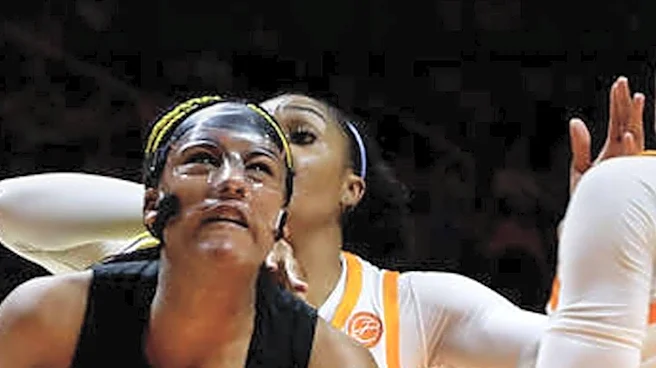
A significant hearing is underway in Oregon to determine if women's college basketball players can unionize as employees of a public university. The Oregon State women's basketball team filed a petition in late July with the Oregon Employment Relations
Board, seeking collective bargaining rights under state law. This marks the first time a group of women college athletes has formally sought recognition as a players' union, and it is notable because it involves a public university, meaning the decision will be governed by state law rather than federal. The United College Athletes Association (UCAA) is representing the players, arguing that because players receive compensation for their work and pay taxes, they meet the definition of public employees. Oluchi Okananwa, an All-Big Ten selection from Maryland and interim president of the UCAA, emphasized the players' desire for meaningful protections, fair compensation, and a collective bargaining agreement. Oregon State, however, contends that its women's basketball players are not employees and that financial aid and NIL agreements are not wages.
Why It's Important?
This hearing holds immense importance for the future of college athletics, particularly regarding the employment status of student-athletes. A ruling in favor of the players could set a precedent for other public universities across the U.S., potentially reshaping the landscape of NCAA sports. It challenges the long-held NCAA stance that student-athletes are not employees, despite the revenue they generate. If players are recognized as employees, it could lead to significant changes in wage and hour laws, tax treatment, Title IX compliance, and the competitive relationships among institutions. This development could empower college athletes with greater protections and a stronger voice in decisions affecting their careers, potentially leading to more equitable compensation and working conditions. Conversely, a ruling against unionization would reinforce the current amateur model, maintaining the status quo for college sports.
What's Next?
The Oregon Employment Relations Board, composed of three members appointed by the governor and confirmed by the state Senate, will make a decision following the hearing. High-ranking Oregon State officials, including Provost and Executive Vice President Roy Haggerty, are expected to testify. The board's decision will have immediate implications for the Oregon State women's basketball team and could influence similar efforts by college athletes nationwide. Regardless of the outcome, this case is likely to fuel ongoing debates in Washington, D.C., regarding legislation like the Protect College Sports Act, which aims to reshape college athletics. The legal and financial ramifications of classifying student-athletes as employees are extensive, and any decision will likely face scrutiny and potential appeals, prolonging the discussion about the future of college sports governance and athlete rights.
Beyond the Headlines
The Oregon hearing delves into the fundamental ethical and legal questions surrounding the nature of amateurism in college sports. It highlights the tension between the traditional model of student-athletes and the increasing commercialization of college athletics, where athletes generate substantial revenue for their institutions. The push for unionization reflects a broader societal trend towards greater worker rights and fair labor practices, extending into previously untouched sectors. This case could force a re-evaluation of the economic model of college sports, potentially leading to a more professionalized system where athletes are recognized for their labor contributions. The outcome will not only impact the financial well-being of athletes but also raise questions about the balance of power between universities, athletic conferences, and the athletes themselves, potentially ushering in a new era of athlete empowerment and collective action.