





What's Happening?
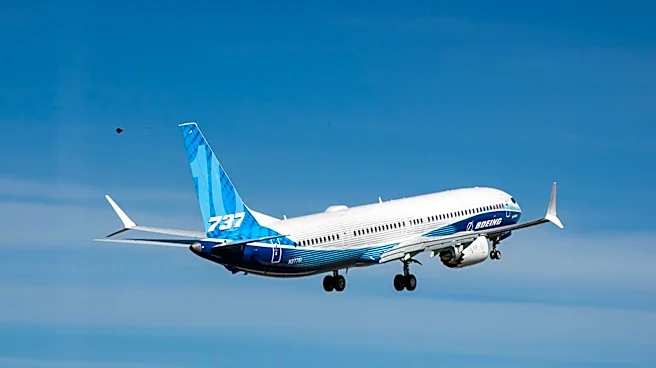
US-Bangla Airlines has announced plans to lease 21 Boeing narrowbody aircraft by the end of 2027, aiming to expand its operations across Asia and the Middle East. The expansion includes 15 Boeing 737-8s and six 737-800s, sourced through five leasing companies.
This move is part of the airline's strategy to open new international destinations and increase frequencies on existing routes, thereby enhancing Bangladesh's connectivity with the global economy. The airline, currently the second-largest in Bangladesh by scheduled capacity, is focusing on increasing its international capacity, which has grown by 12.4% year over year. US-Bangla's Managing Director, Mohammad Abdullah Al Mamun, emphasized the potential for Bangladeshi airlines to capture a larger share of the international passenger market, which is currently dominated by foreign carriers.
Why It's Important?
The expansion of US-Bangla Airlines' fleet is significant for Bangladesh's aviation industry and its economy. By increasing its international routes and capacity, the airline aims to strengthen Bangladesh's global connectivity, which is crucial for economic growth and job creation. The move also highlights the potential for local airlines to capture a larger share of the international market, which is currently dominated by foreign carriers. This expansion could lead to increased competition, potentially lowering airfares and improving service quality for passengers. Additionally, the airline's focus on new destinations like Kuwait City and Madinah, where there is existing demand, could enhance trade and tourism links between Bangladesh and these regions.
What's Next?
US-Bangla Airlines plans to introduce additional widebody aircraft to connect Bangladesh directly with major destinations in Europe, Oceania, and North America. Future destinations under consideration include Sydney, London, and Rome, which could further enhance Bangladesh's international connectivity. The airline's expansion strategy may prompt responses from competitors, both local and international, as they adjust to the increased competition in the market. Regulatory approvals will be crucial for the airline to successfully launch new routes, and the outcome of these processes will determine the pace and extent of its expansion.