






What's Happening?
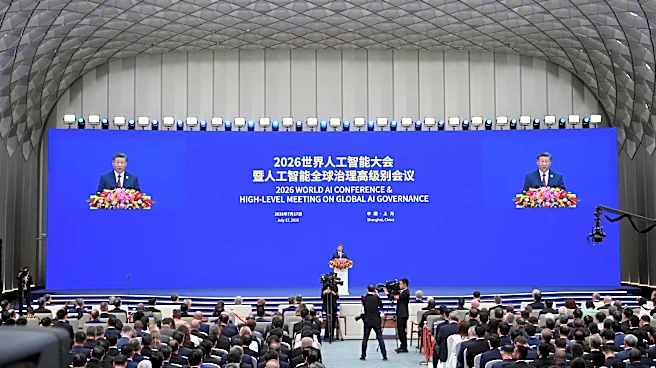
Fibocom, a leading provider of wireless communication modules, and Intedigo have showcased a demonstration of 5G bidirectional data transmission at the World Artificial Intelligence Conference 2026 in Shanghai. The demonstration involved a remote driving
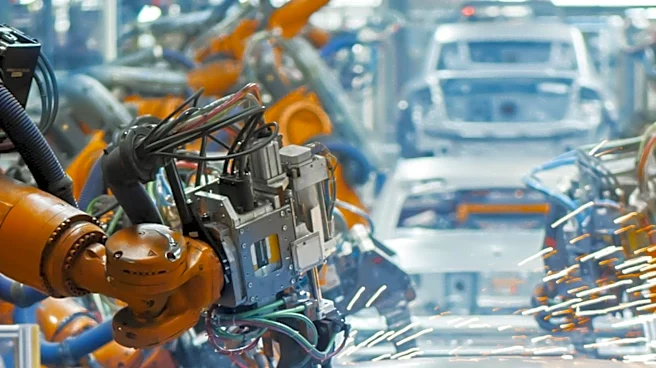
system that allows users to control a real race car from a distance, highlighting the capabilities of 5G connectivity in enabling remote operation. The system supports high-definition video transmission and low-latency control, essential for high-speed maneuvers. This event marks a significant step in the application of 5G technology to embodied AI, which involves integrating AI into physical systems like robots and autonomous machines. The demonstration underscores the potential of 5G to transform industrial environments by providing reliable connectivity for telemetry feedback, remote control, and operational management.
Why It's Important?
The demonstration by Fibocom and Intedigo is crucial as it highlights the transformative potential of 5G technology in industrial applications. By enabling reliable and low-latency communication, 5G can facilitate the integration of AI into various sectors, enhancing automation and operational efficiency. This development is particularly significant for industries that rely on real-time data transmission and remote operation, such as logistics, manufacturing, and transportation. The ability to remotely control machines and receive real-time feedback can lead to safer and more efficient operations, reducing the need for human intervention in hazardous environments. As 5G technology continues to evolve, it is likely to drive significant advancements in the field of embodied AI, potentially reshaping the landscape of industrial automation.
What's Next?
Following the successful demonstration, Fibocom and Intedigo plan to continue their collaboration to expand the application of 5G connectivity in embodied AI systems. This includes extending the technology to more robots, autonomous machines, and mobile intelligent terminals. The companies aim to enable these systems to remain continuously connected and operate reliably in real-world applications. As the technology matures, it is expected to see broader adoption across various industries, paving the way for more sophisticated and autonomous operations. Stakeholders in the tech and industrial sectors will likely monitor these developments closely, as they could lead to new business opportunities and operational efficiencies.
Beyond the Headlines
The integration of 5G technology into embodied AI systems raises important ethical and legal considerations. As machines become more autonomous, questions about accountability and decision-making in AI-driven operations will become increasingly relevant. Ensuring that these systems operate safely and ethically will require robust regulatory frameworks and industry standards. Additionally, the widespread adoption of 5G-enabled AI systems could have significant implications for the workforce, as automation may lead to changes in job roles and skill requirements. Addressing these challenges will be crucial to maximizing the benefits of this technological advancement while minimizing potential risks.