





What's Happening?
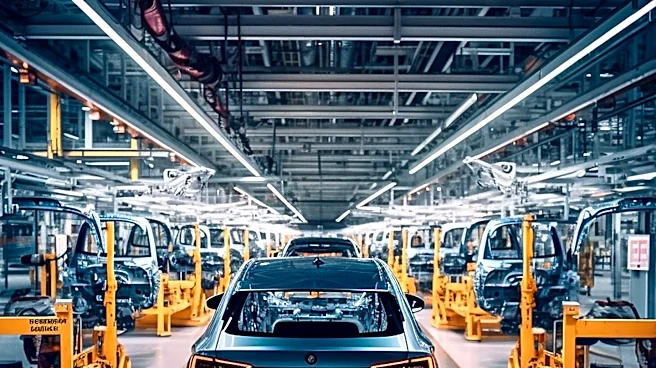
Rivian, an electric vehicle manufacturer, has unveiled its R2 model, marking a strategic shift towards manufacturing-driven development. At the Move 2026 event, CEO RJ Scaringe emphasized the importance of integrating manufacturing realities into design
decisions. The R2 model is positioned as a high-volume product with a starting price of around $45,000, aimed at achieving the scale necessary to support Rivian's vertically integrated approach. This strategy contrasts with the company's earlier premium R1 model, which, despite its technical success, did not generate sufficient volume to amortize heavy in-house investments. The R2 is designed to meet aggressive cost targets while maintaining the exceptional customer experience expected from Rivian. The company is also expanding its production capacity with a new plant in Georgia, capable of producing 300,000 units in its first phase.
Why It's Important?
Rivian's shift towards a manufacturing-driven strategy is significant for the electric vehicle industry, as it highlights the challenges and opportunities of scaling production. By focusing on high-volume production, Rivian aims to reduce costs and improve profitability, which is crucial for sustaining its business model. This approach also underscores the importance of vertical integration in controlling critical technologies and accelerating learning. Rivian's strategy could influence other automakers to prioritize manufacturing considerations in their product development processes. Additionally, the expansion of production capacity in Georgia is likely to have economic implications, potentially creating jobs and boosting local economies.
What's Next?
Rivian's focus on the R2 model and its manufacturing strategy suggests a deliberate approach to scaling production while maintaining quality. The company's decision to simplify initial product configurations and delay the introduction of the next R3 product indicates a cautious approach to managing production complexity. As Rivian continues to expand its production capacity, it will need to navigate supply chain challenges and ensure that its manufacturing processes are efficient and scalable. The success of the R2 model will likely influence Rivian's future product development and manufacturing strategies.