







What's Happening?
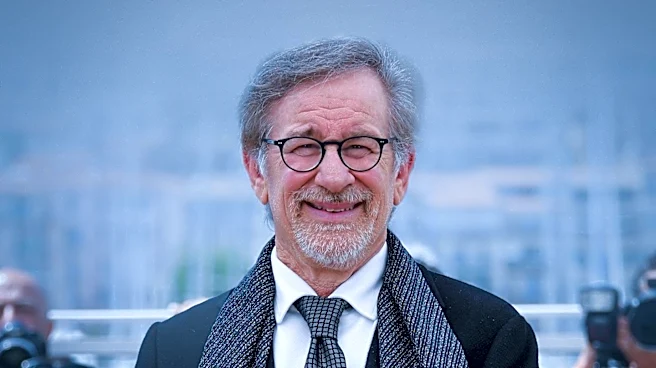
Steven Spielberg and Clint Eastwood, two prominent figures in Hollywood, held contrasting initial opinions regarding Stanley Kubrick's 1980 film 'The Shining.' According to the source, Spielberg initially expressed a lack of enthusiasm for the film upon
his first viewing, though he later revised his opinion after multiple re-watches. In contrast, Eastwood unequivocally dismissed 'The Shining' as a 'giant failure,' finding nothing terrifying about it. This divergence in opinion occurred despite both directors' mutual respect and professional interactions, which have included Eastwood often taking on projects Spielberg initially considered directing, such as 'The Bridges of Madison County' and 'American Sniper.' Spielberg's initial reaction to 'The Shining' was shared with Kubrick himself, who reportedly saw through Spielberg's attempt to obfuscate his feelings.
Why It's Important?
This anecdote highlights the subjective nature of film criticism, even among highly acclaimed professionals in the industry. The differing initial reactions of Spielberg and Eastwood to a film that later achieved iconic status, 'The Shining,' underscore how perceptions of art can evolve over time or remain steadfastly opposed. For film enthusiasts and aspiring filmmakers, it illustrates that even masterpieces can be met with initial skepticism or outright rejection, challenging the notion of universal artistic appeal. Furthermore, the detail about Kubrick receiving a Razzie nomination for 'Worst Director' for 'The Shining' at the time of its release provides historical context, demonstrating that critical consensus can shift dramatically over decades. This narrative also subtly reveals the dynamics of professional relationships in Hollywood, where mutual respect can coexist with divergent artistic tastes.
What's Next?
While this story primarily reflects on past events, it contributes to the ongoing discourse surrounding film history and critical reception. The enduring legacy of 'The Shining' as a horror classic, despite its initial mixed reviews and the strong negative opinion of a figure like Clint Eastwood, suggests that a film's true impact and artistic merit can take time to be fully appreciated. For film studies and critical analysis, this serves as a case study in how initial critical responses do not always align with long-term cultural significance. The anecdote also reinforces the idea that even the most celebrated directors are not immune to critical scrutiny or differing opinions from their peers.
Beyond the Headlines
The contrasting views on 'The Shining' by Steven Spielberg and Clint Eastwood delve into the deeper implications of artistic interpretation and the evolution of critical perspectives. Spielberg's eventual conversion after multiple viewings suggests that some works require time and repeated engagement to reveal their full depth and impact, challenging the immediacy often demanded by contemporary criticism. Eastwood's unwavering dismissal, on the other hand, highlights the validity of personal taste and the fact that not all acclaimed art resonates with everyone, regardless of their expertise. This narrative also touches upon the psychological aspect of creative reception, where a director like Kubrick, known for his meticulousness, would directly confront Spielberg about his initial lukewarm response. It underscores the intense personal investment artists have in their work and the vulnerability inherent in presenting it to the world.