







What's Happening?
Reju, a Paris-based company owned by Technip Energies, is expanding its network of textile mills across Europe and the Americas to develop finished fabrics from regenerated polyester. This initiative aims to integrate polyester recovered from post-consumer
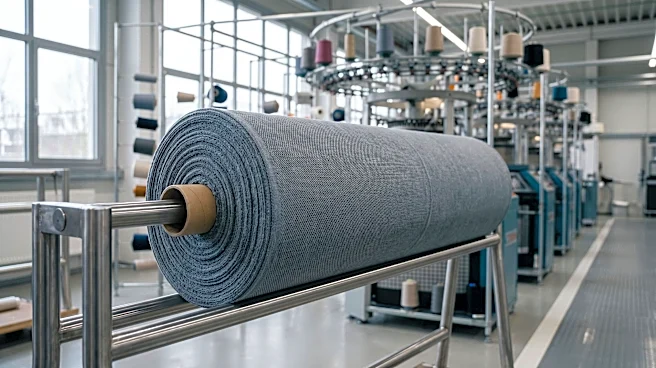
textile waste into commercially viable fabrics, bypassing the quality limitations often associated with conventional mechanical recycling. Reju is developing a chemical recycling process based on IBM Research technology and is establishing industrial-scale 'Regeneration Hubs.' As part of this expansion, Swisstex Direct, with operations in Los Angeles and El Salvador, will provide knitting, dyeing, finishing, and product development services for apparel brands, extending Reju's network into the Americas. This collaboration is crucial for ensuring that regenerated materials can be efficiently processed by existing textile manufacturers and meet performance requirements.
Why It's Important?
This expansion is significant for the U.S. textile industry and its sustainability efforts. The inclusion of Swisstex Direct in Los Angeles means that U.S. apparel brands will have direct access to high-quality regenerated polyester, fostering a more circular economy within the domestic textile sector. This initiative addresses the growing demand for sustainable materials and reduces reliance on virgin polyester, thereby decreasing environmental impact. For U.S. manufacturers, it presents an opportunity to innovate and meet consumer and regulatory pressures for eco-friendly products. The ability to process post-consumer textile waste locally can also create new jobs and strengthen the U.S. manufacturing base in advanced textiles.
What's Next?
Reju is actively progressing plans for a network of Regeneration Hubs, including the selection of Rochester, New York, for its first North American facility. This indicates a significant future investment in U.S. infrastructure for textile recycling. The collaboration with Swisstex Direct and the establishment of U.S. hubs will likely accelerate the adoption of regenerated polyester in the American market. Future developments will focus on scaling up these operations and further integrating the regenerated materials into the supply chains of major apparel brands. This could lead to a substantial shift in how textile waste is managed and utilized in the U.S., moving towards a more sustainable and resource-efficient model.
Beyond the Headlines
The move by Reju, leveraging IBM Research technology, highlights a broader trend of technological innovation driving sustainability in traditional industries. This chemical recycling process represents a significant leap beyond mechanical recycling, offering higher quality and broader applicability for recycled materials. The initiative also underscores the increasing importance of international partnerships in addressing global environmental challenges. For the U.S., this development could catalyze further research and investment in advanced recycling technologies, positioning the country as a leader in sustainable manufacturing. It also raises questions about consumer awareness and demand for products made from regenerated materials, which will be crucial for the long-term success and widespread adoption of such initiatives.