
What's Happening?
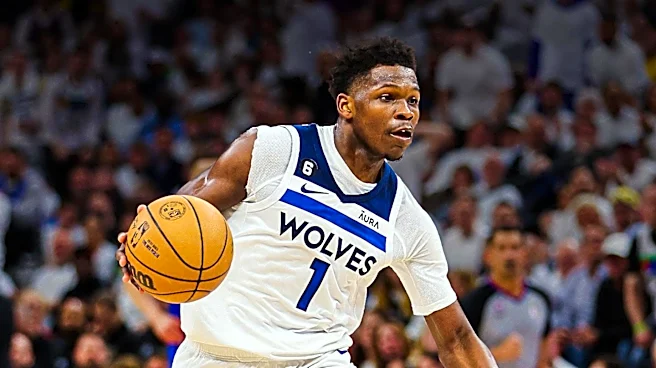
The Minnesota Timberwolves are intentionally leaving one standard roster spot open, opting for financial flexibility rather than signing a 15th player immediately. This decision is driven by the team's
position approximately $4.5 million below the second apron. Filling the final spot with a veteran-minimum deal would reduce this cushion to about $2 million, as the luxury tax would inflate the cost to around $11 million. The front office's strategy is to preserve this financial leeway, which allows them to absorb additional salary in potential trade deals closer to the trade deadline. This approach has been successfully utilized by the Timberwolves in the past to make mid-season additions. While names like Kevin Love have been discussed as potential veteran additions, the team is prioritizing strategic long-term roster building over sentimental signings or immediate depth pieces, especially behind center Rudy Gobert where the roster is considered thin.
Why It's Important?
This strategic decision by the Timberwolves has significant implications for their competitiveness and financial management in the NBA. By maintaining cap flexibility, the team positions itself to be a more active and impactful player in the trade market, particularly as the season progresses towards the trade deadline. This allows them to target higher-caliber talent that might become available later, rather than settling for free agency leftovers. The financial cushion also provides a buffer against potential luxury tax penalties, which can be substantial for teams exceeding salary cap thresholds. This approach reflects a calculated risk, as it means starting the season with a slightly smaller roster, but it could ultimately lead to a stronger, more tailored team for a playoff push. The ability to absorb additional salary in trades is a powerful tool for contending teams looking to fine-tune their rosters without incurring prohibitive financial costs.
What's Next?
The Minnesota Timberwolves are expected to begin the season with 14 players on their roster, leaving the 15th spot open. The front office will likely monitor the trade market closely, utilizing their remaining apron room to potentially acquire a significant player at the trade deadline. This strategy suggests that any final roster additions, whether through trade returns or a bought-out veteran with playoff value, will be made with a focus on maximizing the team's chances in the postseason. While a reunion with Kevin Love has been discussed, a deal is considered less likely to happen immediately, as the team prioritizes financial prudence and strategic timing. The team's performance in the initial part of the season will likely influence the type of player they pursue to fill the final spot, aiming for an upgrade that aligns with their goal of competing at the top of the Western Conference.
Beyond the Headlines
The Timberwolves' decision highlights a growing trend in professional sports, particularly in leagues with complex salary cap structures like the NBA, where financial strategy is as crucial as on-court talent. This approach moves beyond simply acquiring the best available players to a more nuanced management of assets, including cap space and trade flexibility. It underscores the shift from a reactive to a proactive front office mentality, where long-term planning and strategic patience are valued. This could set a precedent for other teams to adopt similar strategies, prioritizing future trade opportunities and financial health over immediate, potentially less impactful, roster fillings. The emphasis on financial flexibility also reflects the increasing cost of player salaries and the punitive nature of luxury taxes, forcing teams to be more creative in how they construct and manage their rosters to remain competitive.