







What's Happening?
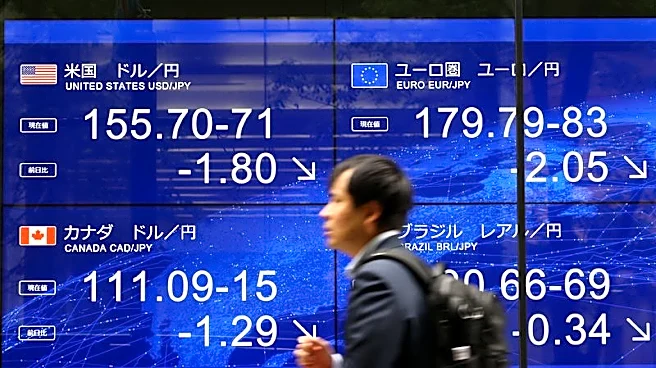
The yen's initial rally following a joint intervention by the U.S. and Japan has begun to fade, with the currency settling around 158.50 to the dollar. This intervention, aimed at supporting the yen, initially boosted its value from above 163 to 155 against
the dollar. However, the gains have not been sustained, and market attention is now shifting towards domestic policy changes rather than government-backed measures. Robert Sockin, chief U.S. economist at PGIM, expressed skepticism about the long-term effectiveness of the intervention, suggesting that it might not reverse the yen's weakness trend and could potentially backfire.
Why It's Important?
The intervention underscores the U.S.'s concern over prolonged yen weakness, which could lead to inflation in Japan, affect other Asian currencies, and destabilize global markets. The fading rally highlights the challenges of currency interventions in achieving sustained results. The situation emphasizes the interconnectedness of global economies and the potential ripple effects of currency fluctuations. For investors and policymakers, the yen's performance serves as a barometer for broader economic stability and the effectiveness of coordinated international efforts to manage currency values.
What's Next?
As the yen's rally diminishes, market participants are likely to focus on potential policy adjustments by the Bank of Japan and the Federal Reserve. Speculators may continue to influence the yen's trajectory, potentially prompting precautionary rate hikes. The situation could lead to increased volatility in currency markets, affecting trade and investment decisions. Policymakers will need to balance intervention strategies with domestic economic considerations to maintain stability. The outcome of these developments will be closely watched by global financial markets, as they could signal shifts in monetary policy and economic priorities.